
Last updated November 20, 2026
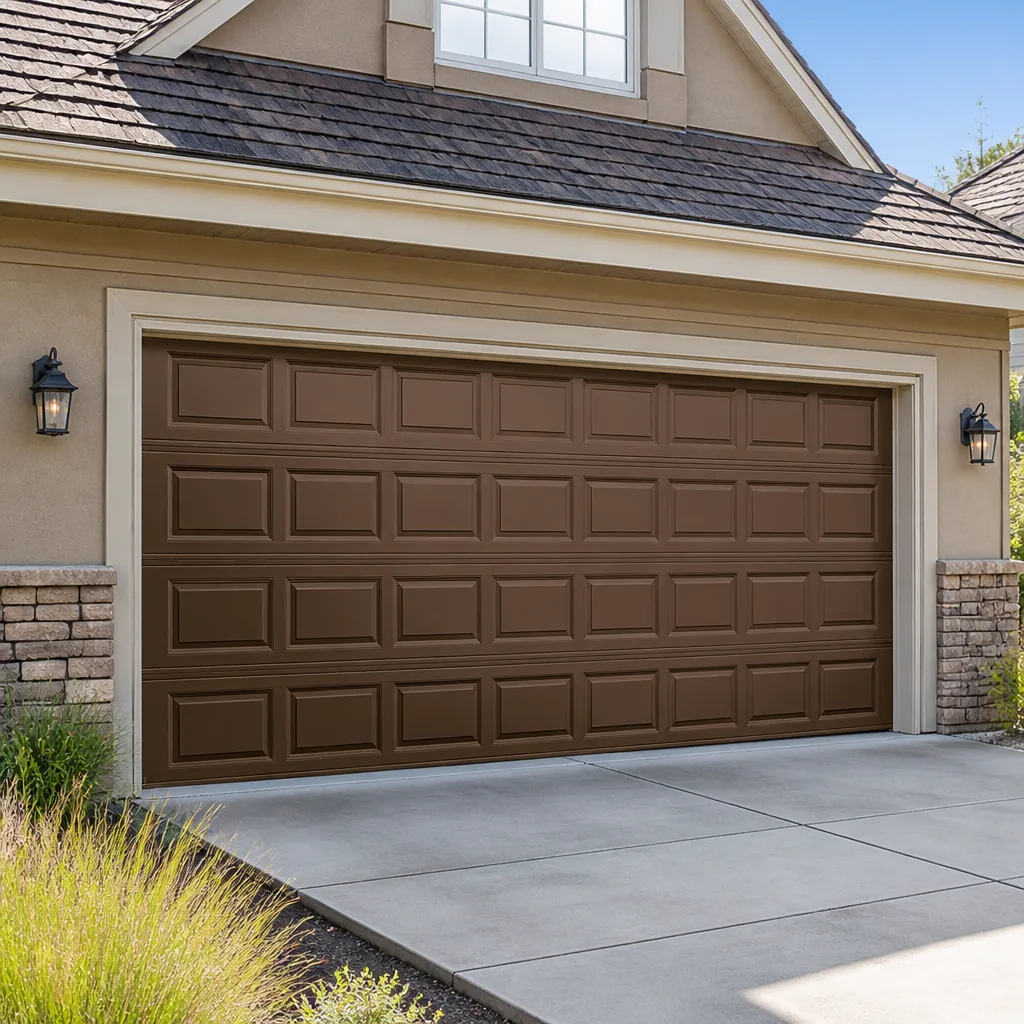 Raised-panel steel
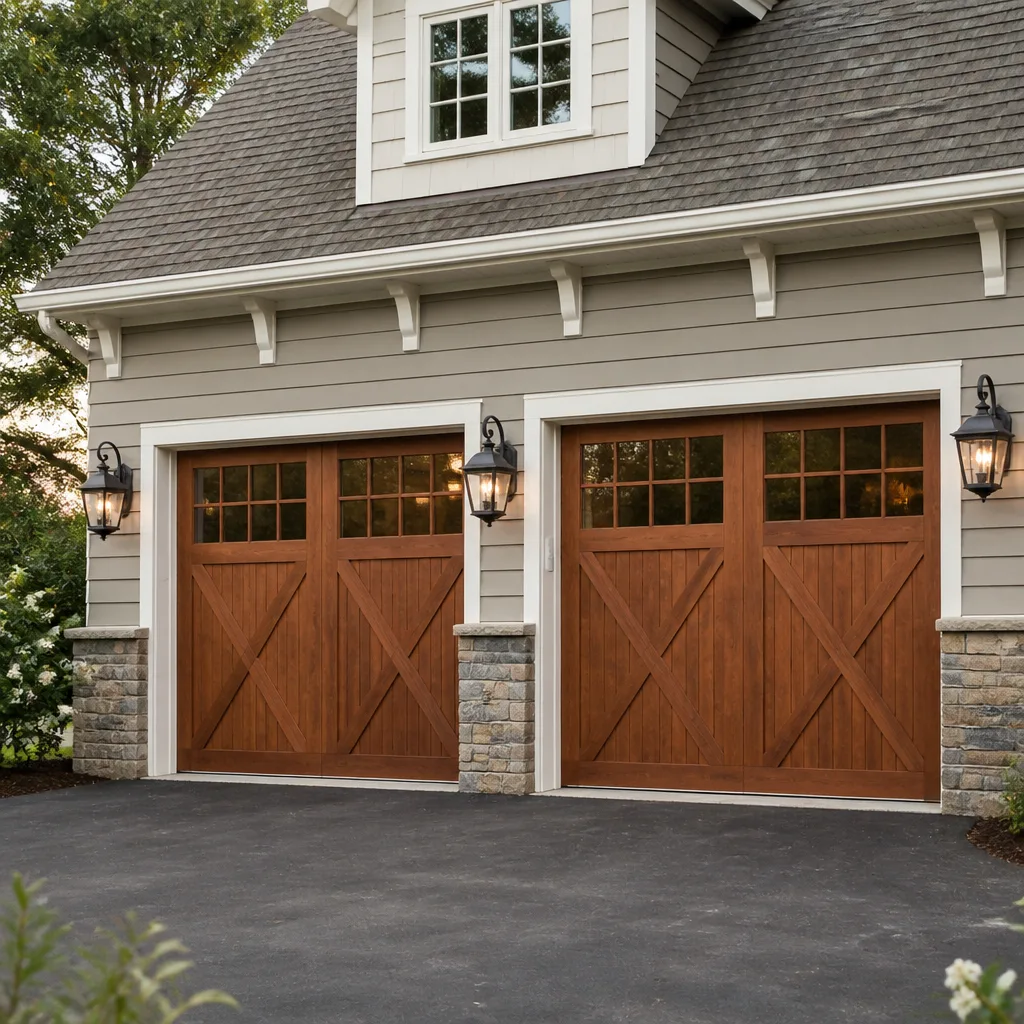 Carriage house
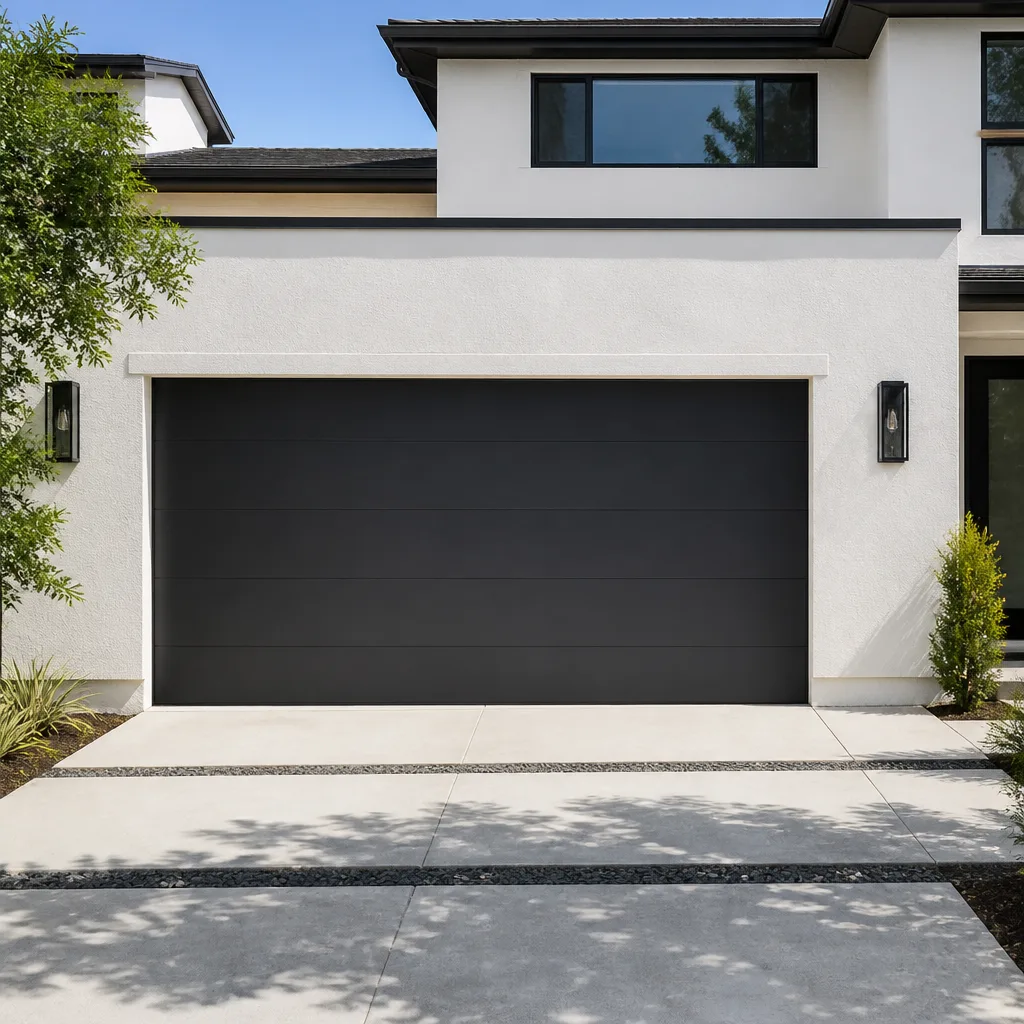 Modern flush
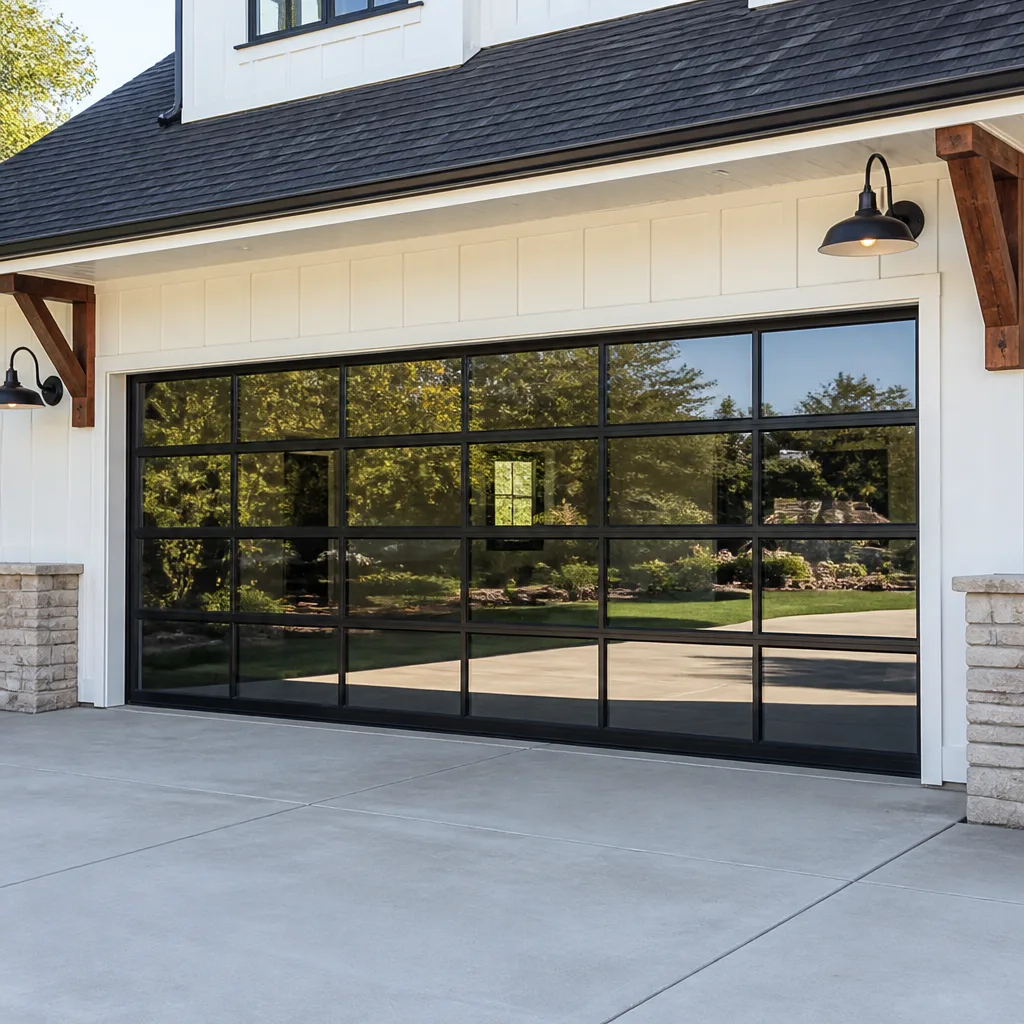 Full-view glass
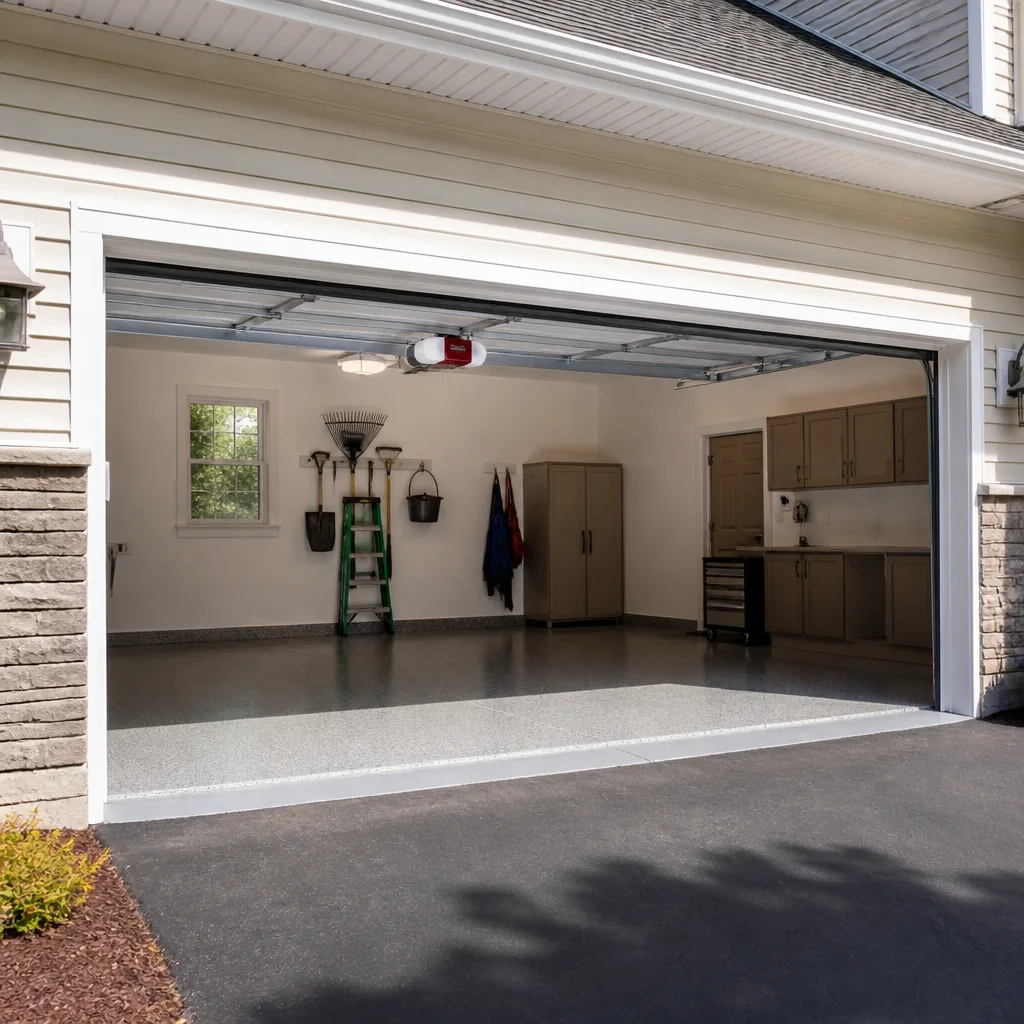 LiftMaster openers
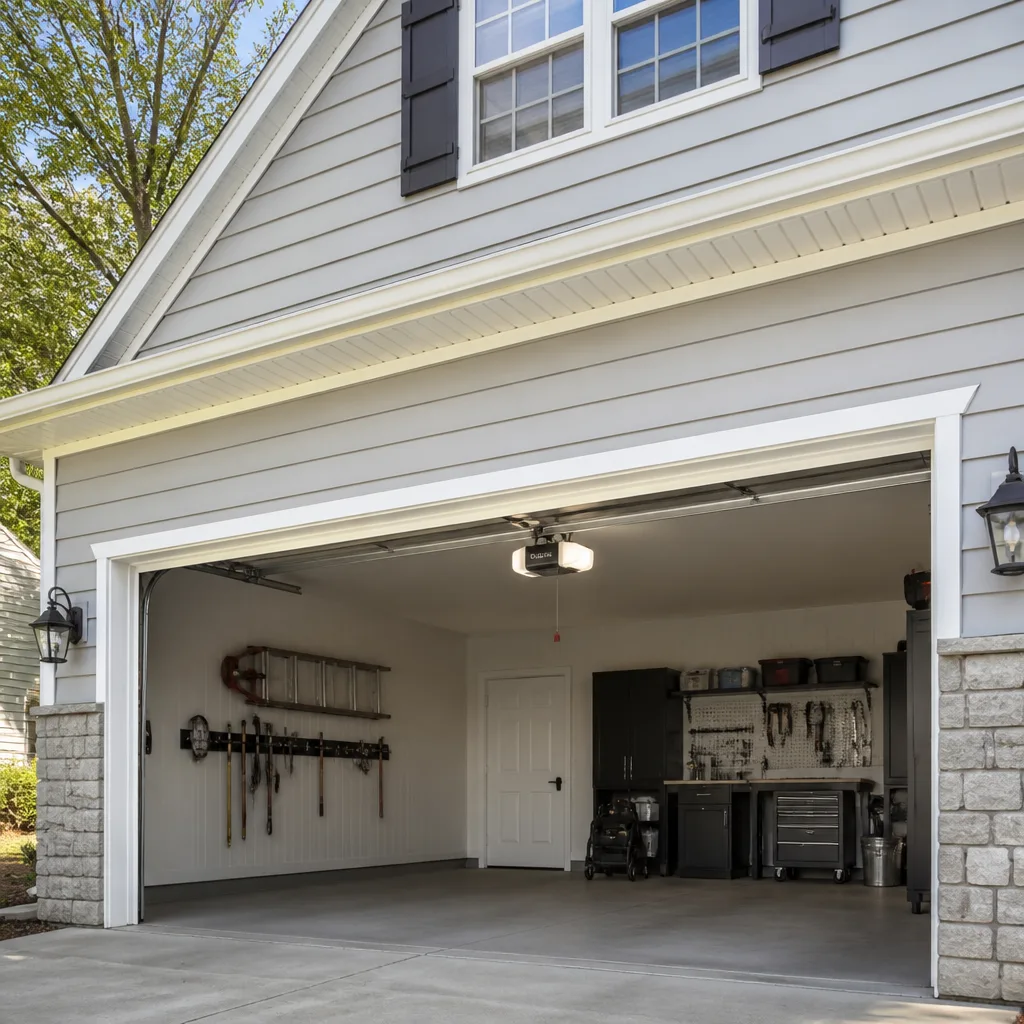 Chamberlain openers
Full 25-point door and opener safety check with every visit - springs, cables, rollers, tracks, and your LiftMaster or Chamberlain opener included
You get a price before we start. It does not change when the pro arrives.
Get your free estimateThe Complete Guide to Garage Doors in Norwood
Most homeowners in Norwood press a button, hear the door go up, and never think about it again until something breaks. That’s the problem. A garage door is a mechanical system with five moving subsystems under constant tension, and the average door cycles more than a thousand times a year. That’s more usage than most furnaces see. The counterintuitive truth is that the cheapest repair you’ll ever make is the one you catch early, because when one component fails, it drags the others down with it. A worn roller takes out a track. A stretched spring overloads an opener. A misaligned door grinds its cables. This guide explains how the system actually works, what fails in Norwood’s climate, how to read your own hardware, and when to stop guessing and call someone.
Quick Answer
A garage door is a balanced mechanical system of springs, cables, tracks, rollers, and an opener, and it needs inspection once a year and lubrication twice. In Norwood, the two biggest local failure drivers are frost heave shifting the concrete slab under the door and the freeze-thaw cycle stiffening springs and seals through winter. Most problems are cheaper to fix the earlier you catch them, and anything involving torsion springs or cables belongs with a trained technician, not a homeowner with a wrench.
Styles & brands we work with
- Raised-panel steel
- Carriage house
- Modern flush
- Full-view glass
- LiftMaster openers
- Chamberlain openers
Table of Contents
- The Five Subsystems of a Garage Door
- How Norwood’s Climate and Soil Affect Your Door
- What “Full-System” Service Means Versus Single-Component Repair
- How to Read Your Own Door Before You Call Anyone
- Realistic Component Lifespans in New England
- A Yearly Inspection You Can Do Safely
- Repair or Replace? How to Decide
- What Garage Door Work Typically Costs
The Five Subsystems of a Garage Door
Every sectional garage door is built around five subsystems that share the load. Understanding them explains why a “small” problem rarely stays small.
- Springs. Torsion springs mount on a shaft above the door and store the energy that lifts it. Extension springs run along the horizontal tracks on older doors. Springs carry the door’s entire weight, which is why they’re the most dangerous part of the system.
- Cables. Steel cables run from the bottom corners up to the springs and keep the door level as it travels. A slack or frayed cable is a warning sign, not a maintenance item.
- Tracks and rollers. The vertical and horizontal tracks guide the door, and the rollers ride inside them. Bent track or worn nylon rollers make the door drag, which strains everything upstream.
- The opener. The motor, rail, and drive system (belt, chain, or screw) push the door up and pull it down. A correctly balanced door needs the opener only to guide it, not to lift its full weight.
- Panels and hinges. The door sections, their hinges, and the bottom seal. Panels take impact and weather; hinges are the pivots that let the door articulate.
Here’s the key insight: these parts are tuned to work together. If your springs weaken, the opener works harder and its gear wears faster. If a roller seizes, the door twists slightly in the track and the cable rubs. If frost heave lifts the slab, the bottom seal gapes and the whole door sits out of square. Failures cascade. That’s why diagnosing the whole system, not just the broken part, saves money in Norwood.
When a symptom points to the door mechanism rather than the motor, that’s garage door repair territory, and it’s worth having a specialist look at the whole assembly rather than swapping one noisy part and hoping.
How Norwood’s Climate and Soil Affect Your Door
Norwood sits on clay-heavy soil, and that matters more than most homeowners realize. Clay holds water, expands when it freezes, and pushes upward. The concrete apron and garage floor slab are shallow, and repeated frost heave can lift or crack them over the years. When the slab shifts, the bottom of your door no longer meets a flat surface. You get a gap at one corner, a draft, water intrusion, and a door that looks misaligned even though nothing is broken.
On top of that, the freeze-thaw cycle works on the door itself. Steel contracts in cold and expands in warmth. Springs, which are already under extreme tension, lose some of their lift in cold weather and then have to work harder as the temperature swings back. The rubber bottom seal stiffens and cracks. Lubricant thickens. Rollers that spun freely in October can drag by February. In our experience, the calls that cluster in late winter and early spring are almost always doors that were already marginal in the fall.
A few Norwood-specific realities worth knowing:
- Doors on the older streets near the town center often face the prevailing winter wind, which drives snow against the bottom seal and can freeze a door shut.
- Sloped driveways, common on the newer subdivisions, put more load on the opener and cables because the door isn’t traveling on a level plane.
- Doors attached to homes with an unheated garage see wider seasonal temperature swings than attached heated garages, so their springs cycle through a bigger range of tension.
You can’t change the soil or the weather. But you can keep the door balanced, the seal intact, and the tracks clean, which is exactly what makes a door survive a Massachusetts winter without a surprise repair bill.
What “Full-System” Service Means Versus Single-Component Repair
Single-component repair is exactly what it sounds like: someone replaces the broken part and leaves. That’s fine when one part genuinely failed on its own. It’s a false economy when the failed part was a symptom. A door that “needs new springs” very often also has a worn cable, a bent track, and an opener that’s been compensating for a weak spring for months.
Full-system service means the technician looks at all five subsystems, tests the door’s balance with the opener disconnected, and repairs everything the door actually needs. The phrase “we fix the thing that broke” is cheaper today and more expensive in six months.
Then there’s the brand question. Brand-specific dealers are set up to service what they sell. Bring them a door or opener from another manufacturer and you often get a shrug, a referral, or a recommendation to replace the whole unit with their brand. That’s not dishonest, it’s just their business model. A brand-agnostic specialist works on the equipment you already own. We service products from LiftMaster, Chamberlain, Genie, Clopay, Amarr, Wayne Dalton, Craftsman, and Raynor, so the answer to “do you work on my brand?” is almost always yes.
That matters on installations, too. When you’re replacing a door or an opener, a full-system specialist can match the new equipment to your existing rails, your door’s weight, and your home’s wiring instead of forcing a fit. If your opener has started misbehaving, our guide to garage door opener repair walks through the symptoms and what they usually point to.
How to Read Your Own Door Before You Call Anyone
Before you call anyone, you can identify a lot about your door just by looking. This isn’t about doing the repair yourself. It’s about knowing what you have so the conversation is faster and the estimate is accurate. Every point below is a look or a listen, not a disassembly.
- Identify the spring type. Look above the door. If you see a horizontal steel shaft with coiled springs wound around it, that’s a torsion system. If the springs run horizontally along the top of the track, you have extension springs. Torsion doors almost always have a red or black winding cone on the spring; that’s the part under extreme tension.
- Trace the cables. Look at the bottom corners of the door. Cables should run straight from the corner bracket up to the drum or pulley, tight and centered. A cable that’s slack, kinked, or frayed on one side means the door is out of balance.
- Look at the rollers. The rollers ride inside the track. Nylon rollers look white or grey; steel rollers are metal. Check for cracks, flat spots, or wheels that sit crooked in the track. Note whether the tracks themselves are vertical, horizontal, or angled near the ceiling.
- Check the opener. Open the motor housing cover or look at the label on the unit. You want the brand, the model number if it’s visible, the drive type (belt, chain, or screw), and whether it has a battery backup. This tells a technician whether parts are available and what the unit is designed to handle.
- Test the balance. Close the door fully, disconnect the opener (usually a red pull cord), then lift it to about halfway and let go. A balanced door stays put. A door that slams down has weak springs; one that rises on its own has springs that are too tight. Do this carefully and keep your hands clear.
- Note the bottom seal and slab. Close the door and look at the gap where it meets the floor. A uniform gap is normal. A gap that’s wide at one corner and tight at the other can mean frost heave or a warped panel.
Armed with that, you can describe exactly what you’re seeing. When the balance test fails or you find a frayed cable, that’s a sign to stop and call. High-tension springs and cables are the one component of a garage door that genuinely injures homeowners every year, and it’s not worth the risk to experiment.
Realistic Component Lifespans in New England
Manufacturer estimates assume a mild climate. In New England, freeze-thaw, road salt tracked onto the apron, and heavy seasonal use shorten every component’s life. This table is a realistic starting point, not a schedule. Usage, door weight, and maintenance all move the numbers.
| Component | Typical Lifespan in New England | What Shortens It |
|---|---|---|
| Torsion springs | 7 to 12 years | Cycle count, cold-weather cycling, no lubrication |
| Extension springs | 6 to 10 years | Stretch, rust, heavy doors |
| Cables | 8 to 12 years | Frays, poor alignment, spring failure |
| Nylon rollers | 4 to 7 years | Grit, dry tracks, unbalanced door |
| Steel rollers | 5 to 8 years | Lack of lubrication, rust |
| Bottom seal | 3 to 5 years | Freezing, cracking, UV exposure |
| Opener (belt or chain drive) | 10 to 15 years | Straining against a weak door |
| Track | 15+ years | Impact, out-of-square install, bent by a failed part |
| Panels | 20+ years | Impact, denting, rust at the bottom edge |
Read that table the way an engineer would. The spring and cable ranges overlap, and that’s not an accident. A spring that fails at year eight often takes a cable with it. An opener that gets replaced at year twelve often failed because its door was running out of balance for the last three years. Replacement is cheaper than repair only when the component is at the end of its life and its wear isn’t damaging the rest of the system.
Springs deserve a special mention because they’re the highest-wear part of the whole assembly. When one breaks, the door won’t lift, and the noise is unmistakable. Our guide to garage door spring repair covers what happens next and why a matched pair is usually replaced rather than a single spring.
A Yearly Inspection You Can Do Safely
A ten-minute visual check every fall will catch most spring, cable, and alignment problems before they strand you. This is observation only. Anything that requires loosening hardware or touching a spring is a call to a technician.
- Look at both springs for rust, gaps in the coil, or a visible separation. Any of those means a spring is going.
- Look at both cables at the bottom corners. Frayed strands, kinks, or a cable that’s off its drum are stop signs.
- Wipe down the tracks with a dry cloth, then check for dents, bends, or grit that could slow the rollers.
- Lubricate hinges, rollers, and the spring shaft with a garage-door lubricant (not WD-40) twice a year, at the start and end of the heating season.
- Run the door up and down. Listen. Grinding, squeaking, or a door that seems to shudder means something is dragging.
- Test the balance as described above and check the bottom seal for gaps or cracking.
- Press the wall button and then the safety reverse. The door should reverse when it meets an object, and the opener’s safety sensors should be aligned and lit.
If anything on that list turns up a problem, write it down and call. A worn part that’s caught early gets replaced. A worn part that’s ignored breaks, often at a bad moment, and takes another component down with it.
Repair or Replace? How to Decide
The rule of thumb most technicians use: if the door’s structure is sound and one or two components have failed, repair. If the door itself is sagging, rusted through at the bottom edge, or off its track repeatedly, replacement is the better spend. Here’s how it usually plays out in Norwood:
- Springs and cables failing on a sound door: repair. The panels, track, and opener are fine; only the tension system needs rebuilding.
- Opener failure on a sound door: replace the opener, not the door. Match the new opener’s lift capacity to the door’s weight.
- Bent track after a car bump: repair, unless the panel it bent is also deformed.
- Rusted bottom panel and a sagging middle section: replacement is usually the right call, because patching one panel on a rusted door just moves the problem.
- Repeated alignment problems traced to a shifted slab: sometimes the fix is a new bottom seal and re-hanging the door; sometimes the slab itself needs attention. Worth a look before you spend on new hardware.
The decision is easier when you know your component ages. If your springs are at year ten, your opener at year thirteen, and your panels are rusting at the base, replacement makes more financial sense than a rolling series of repairs. If your door is five years old and the spring broke, that’s a repair all day.
What Garage Door Work Typically Costs
Prices in Norwood track the wider Boston metro, and they depend on the door’s size, weight, and what’s actually wrong. The ranges below are typical estimates, not a quote. The written estimate you get before any work starts sets the final price.
- Spring replacement: one torsion spring typically runs $180-$340; a matched pair is about twice that because both are replaced together. Extension springs run a bit less.
- Cable replacement: typically $150-$300 for a pair, often bundled with a spring job.
- Roller replacement: usually $100-$200 for a full set.
- Opener repair or replacement: repairs commonly start around $120-$250; a new opener installed typically runs $350-$800 depending on drive type and features.
- New door installation: typically $900-$2,500 for a standard single door, more for double doors or premium materials.
Two things drive the range. First, the condition of the rest of the system: a spring replacement on a well-maintained door is straightforward; the same job on a door with frozen rollers and a bent track is more work. Second, the equipment itself: a LiftMaster belt drive and a Craftsman chain drive don’t cost the same. We quote before we touch anything, and the price you agree to is the price on the invoice. If you want a number for your door specifically, call (866) 783-4096 for a free estimate.
Common Mistakes to Avoid
- Ignoring the door until it breaks. A ten-minute fall inspection would prevent most spring and cable failures. Schedule it like a furnace tune-up.
- Greasing the tracks. Tracks should stay dry and clean. Lubricating them attracts grit, which grinds down the rollers. Lubricate the hinges, rollers, and spring shaft instead.
- Replacing one spring when both are the same age. A matched pair wears at the same rate. Replacing one leaves the other on borrowed time, and it usually fails within a season.
- Using a general handyman for springs. Torsion springs require specific winding tools and training, and a mistake can cause serious injury. Use a specialist.
- Blaming the opener for a door problem. A door that won’t lift or closes unevenly is usually a balance issue, not a motor issue. Replacing the opener without fixing the door just wears out the new opener.
- Forcing a door that’s frozen to the slab. In Norwood’s winters, a frozen bottom seal or a slab lifted by frost heave can make the door stick. Forcing it bends panels and strips cables. Clear the ice and check the seal instead.
- Skipping the safety reverse test. The opener’s reverse function is the one safety feature that protects children and pets. Test it every month.
See the difference
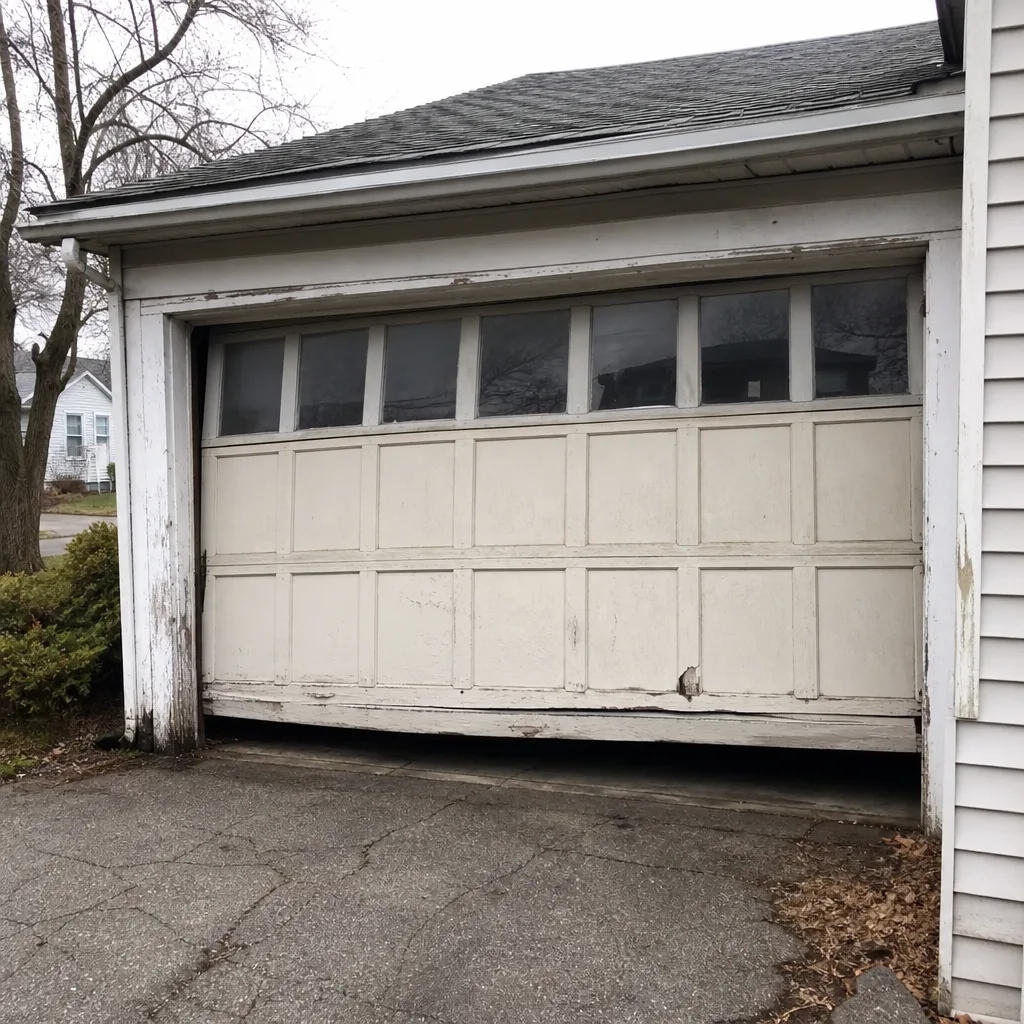 Before
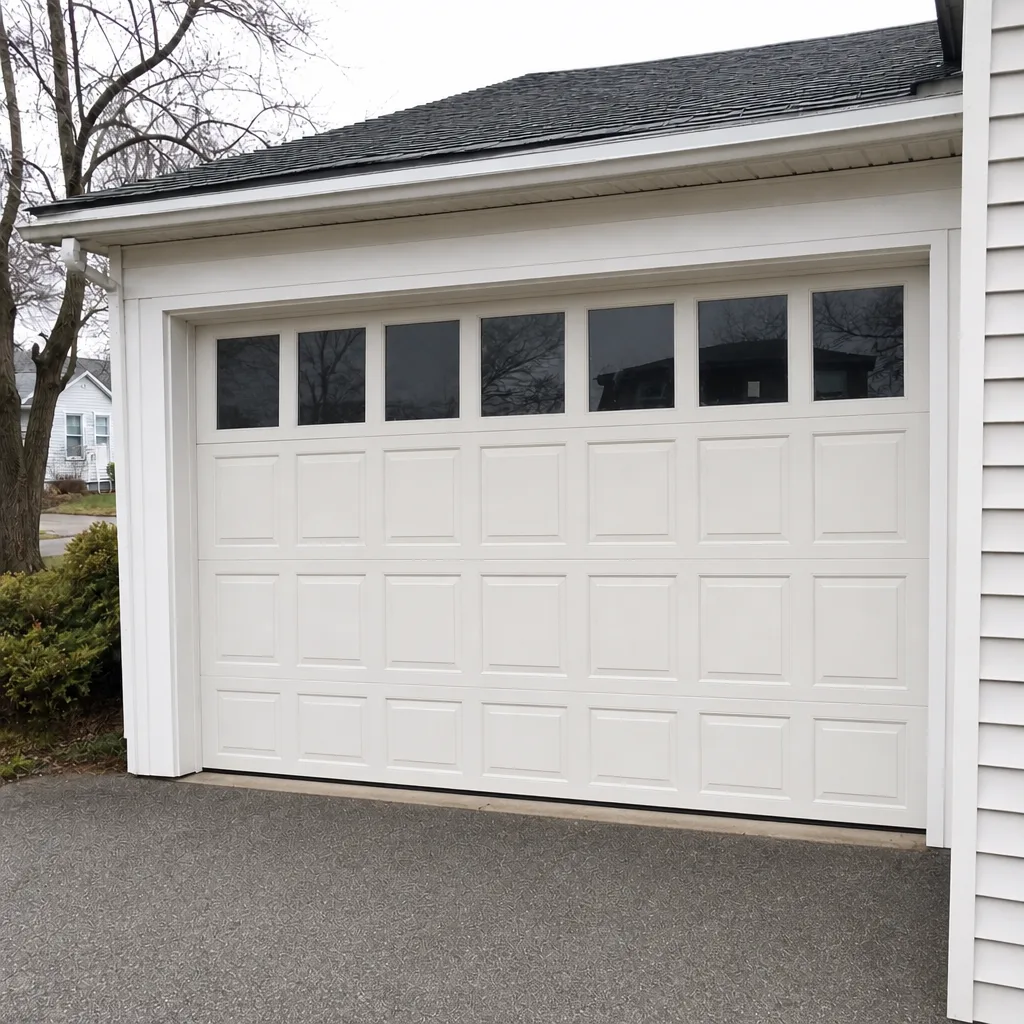 After
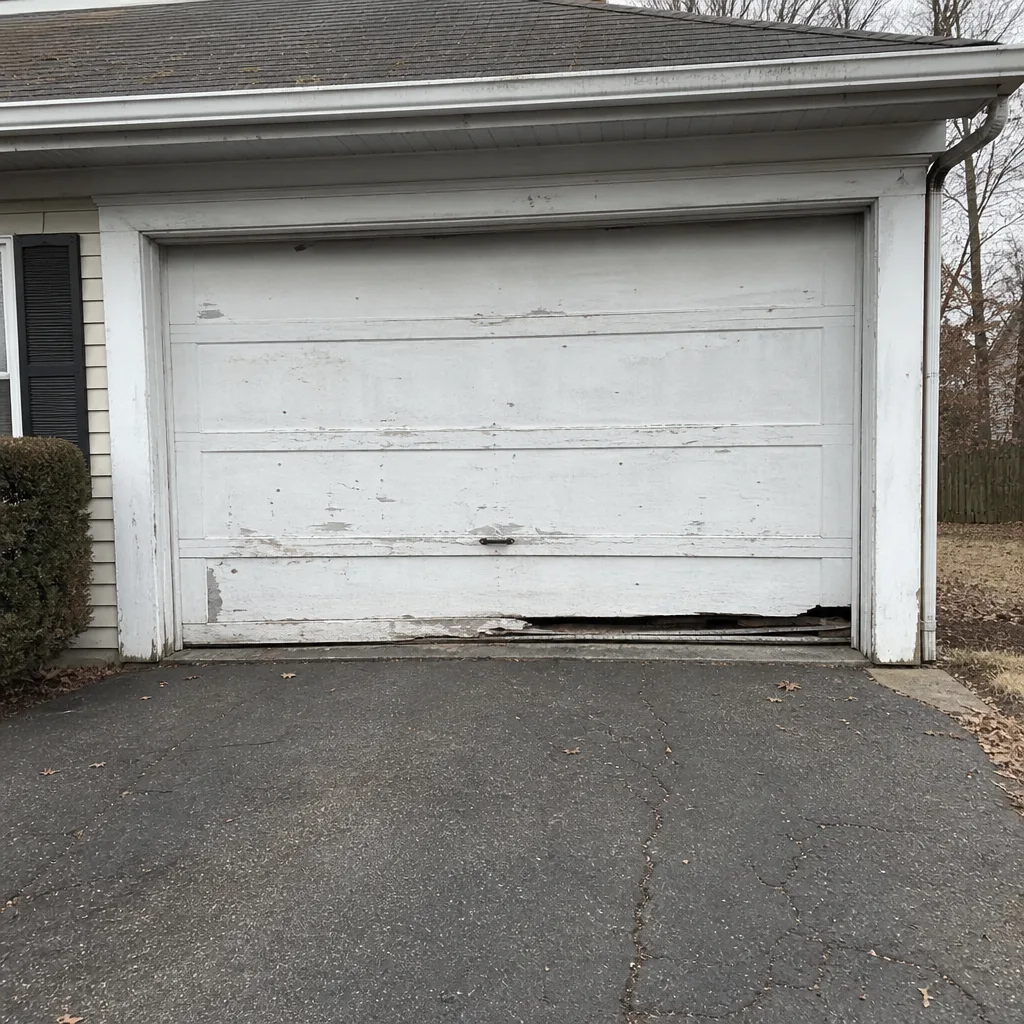 Before
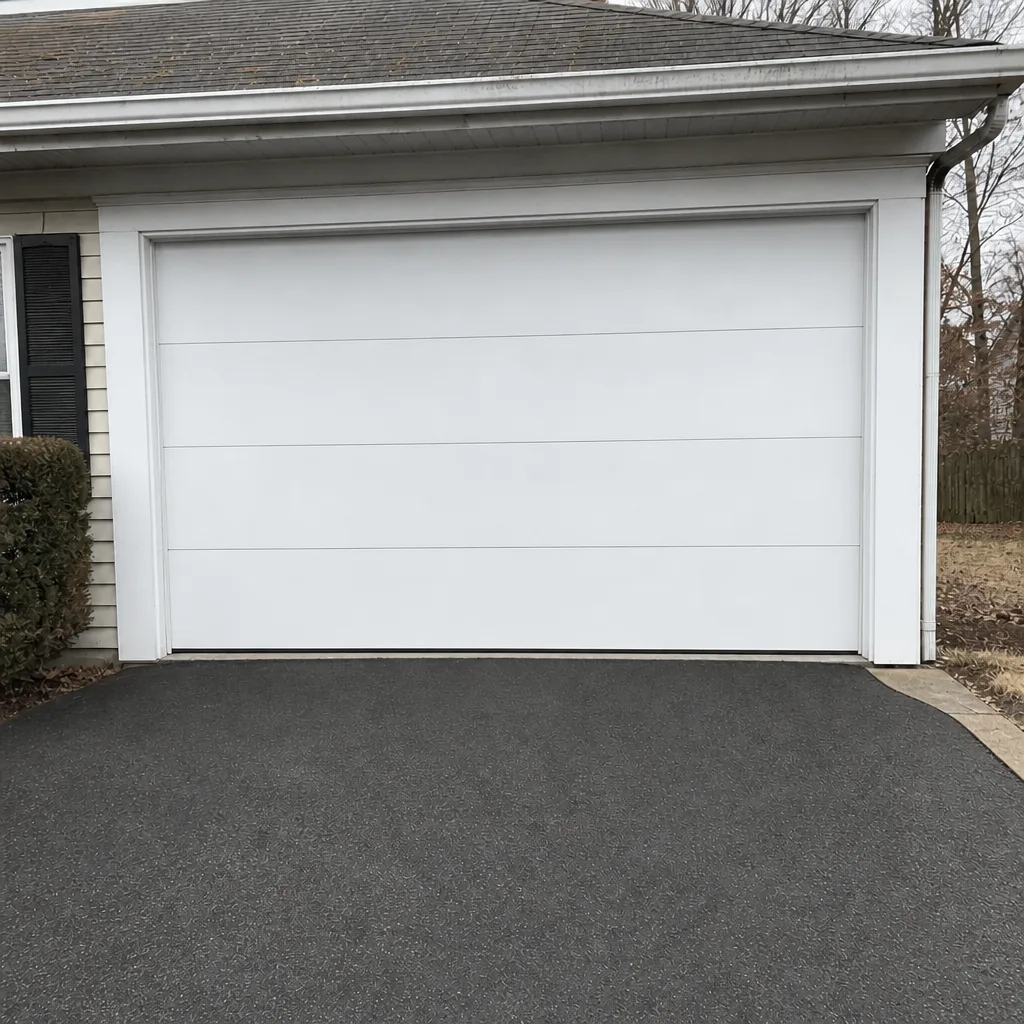 After
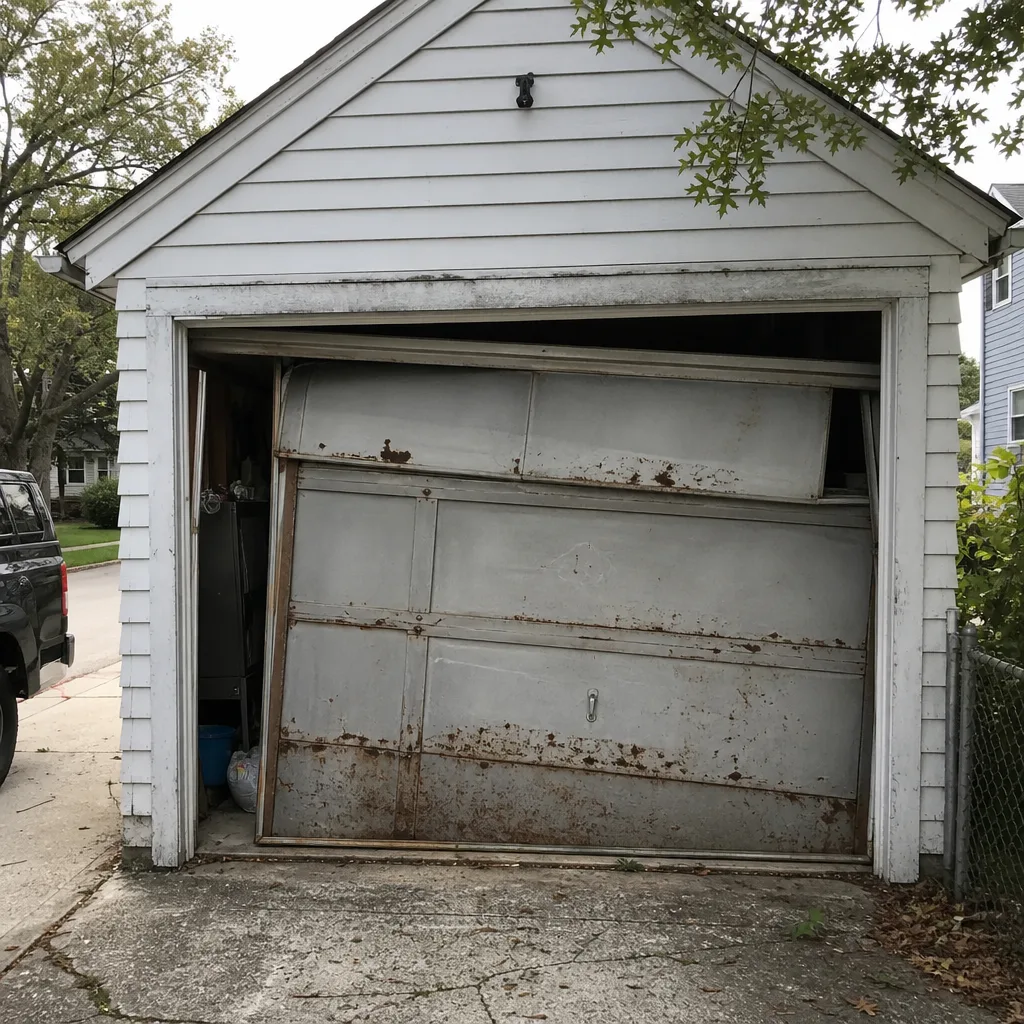 Before
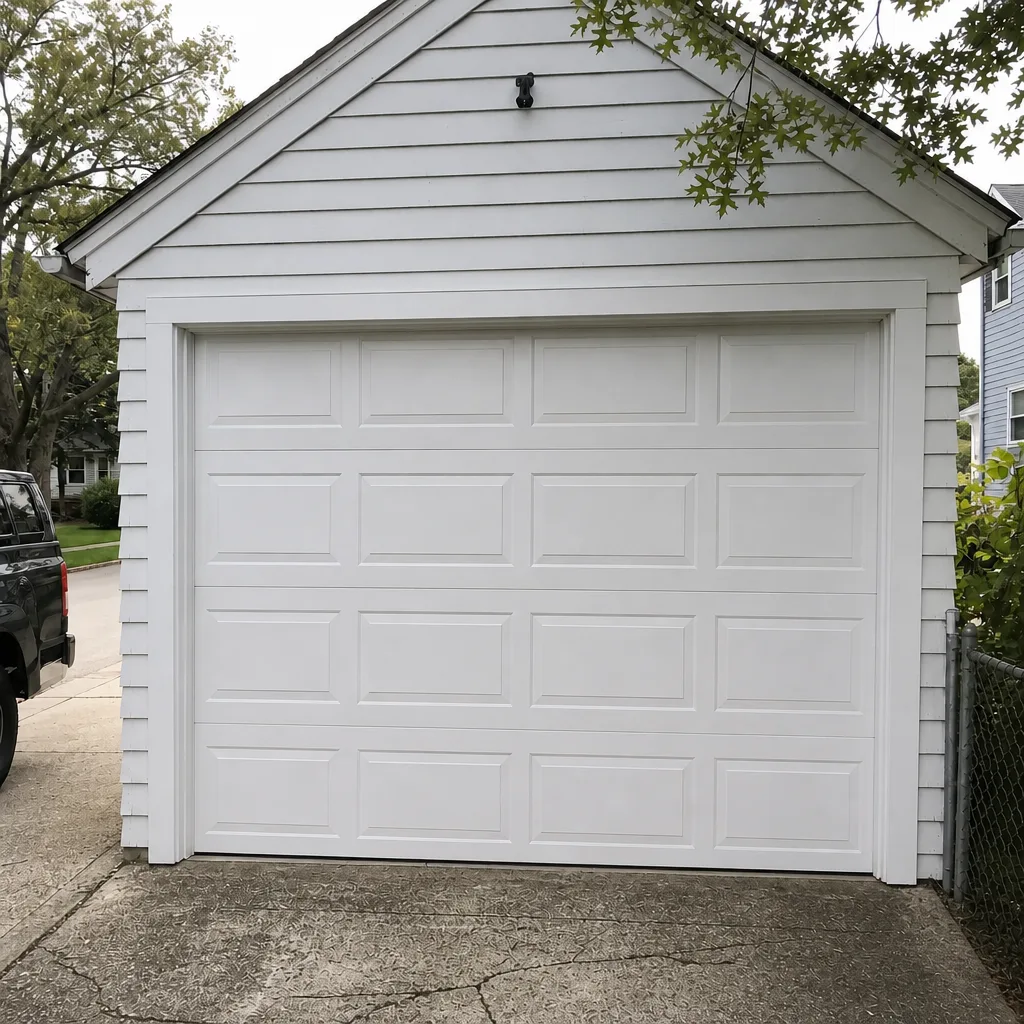 After
When to Call a Professional
Some jobs are worth a homeowner’s time: wiping down tracks, lubricating hinges, replacing a bottom seal, resetting a remote. Everything else on the five subsystems belongs with a trained technician, and the situations below shouldn’t wait:
- A snapped spring, or the door hanging halfway and refusing to move.
- A frayed, kinked, or slack cable.
- A door that comes off its track or hangs crooked.
- An opener that reverses immediately, grinds, or won’t respond.
- A door that’s been forced shut and no longer closes fully.
- A car trapped behind a door that won’t open, or a home left unsecured by a door that won’t close.
Norwood Garage Door Repair offers free estimates in Norwood. We answer 24/7, and we offer emergency garage door service for exactly these situations. Fast dispatch from 7am to 7pm, Sunday through Friday, and we’re closed Saturday. Our technicians have up to 15 years of experience and are trained on Craftsman, Raynor, LiftMaster, Chamberlain, and the other brands on our list. Call (866) 783-4096.
Frequently Asked Questions
Once a year for an inspection and twice a year for lubrication is the right rhythm in Norwood’s climate. The fall inspection catches problems before the freeze-thaw cycle stresses them, and the spring lubrication keeps rollers and hinges moving freely through summer humidity. A door that’s used heavily or is over ten years old benefits from a closer look.
No, and we’d strongly advise against it. Torsion springs store enough energy to cause serious injury, and they require specific winding bars, training, and a controlled release procedure. It’s the single most dangerous repair on a garage door. Call (866) 783-4096 and we’ll handle it safely.
The most common cause in Norwood is frost heave lifting or cracking the concrete slab under the door, which leaves one corner higher than the other. A warped bottom panel, a bent track, or a single broken spring can do the same thing. It’s worth having the door balanced and the slab checked before you replace hardware.
No, not after you’ve agreed to the estimate. We look at the whole system, quote the job, and the written estimate sets the price before any work starts. If we find something during the repair that genuinely couldn’t be seen beforehand, we stop and talk it through with you before touching it.
Yes. We work on the brand you already have, including LiftMaster, Chamberlain, Genie, Clopay, Amarr, Wayne Dalton, Craftsman, and Raynor. If your door or opener is one of those brands, we can service it. If it isn’t, call and ask; we’d rather tell you honestly than waste your time.
For repair and emergency calls, often yes. We answer 24/7 and offer same-day service when the schedule allows. Fast dispatch runs 7am to 7pm, Sunday through Friday, and we’re closed Saturday. A call outside dispatch hours is booked into the next opening. For new door installation, the work is measured and scheduled, so we’ll book a time and give you a written price. Call (866) 783-4096 for the fastest answer.
The Bottom Line
Your garage door is a mechanical system, not a decoration, and it rewards the same care you’d give any other system in your home. Know the five subsystems. Understand that Norwood’s clay soil and freeze-thaw winters put extra stress on springs, seals, and alignment. Read your own door before you call. Keep the tracks clean, the hinges lubricated, and the balance tested. Catch the small stuff early, because the cheapest garage door repair is the one that happens before the cascade starts. When a spring snaps or a cable frays, stop and call a specialist rather than reaching for a wrench. That’s what Norwood Garage Door Repair is here for.
Call (866) 783-4096 for a free estimate. We answer 24/7. Fast dispatch from 7am to 7pm, Sunday through Friday. We work on the brand you already have, and your garage door works or we’re not done.
Written by the team at Norwood Garage Door Repair.