
Last updated November 20, 2026
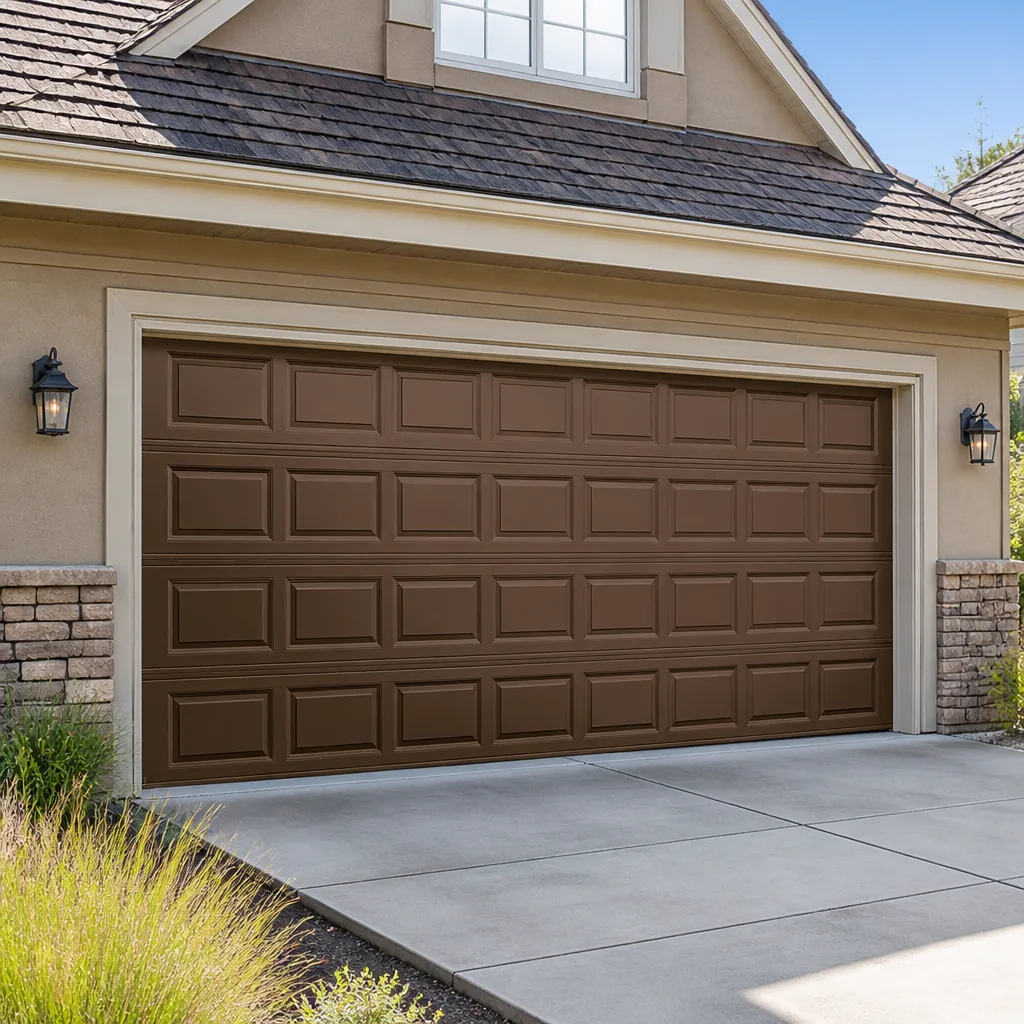 Raised-panel steel
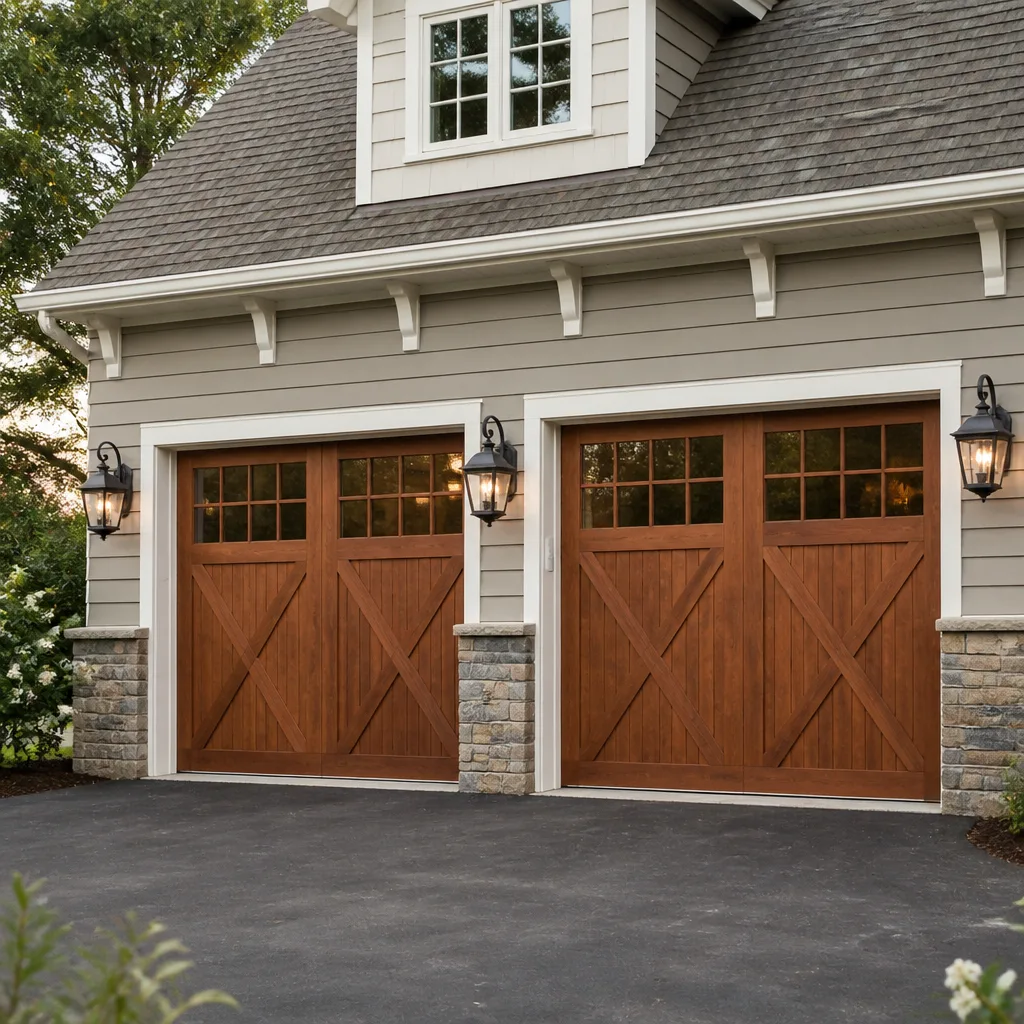 Carriage house
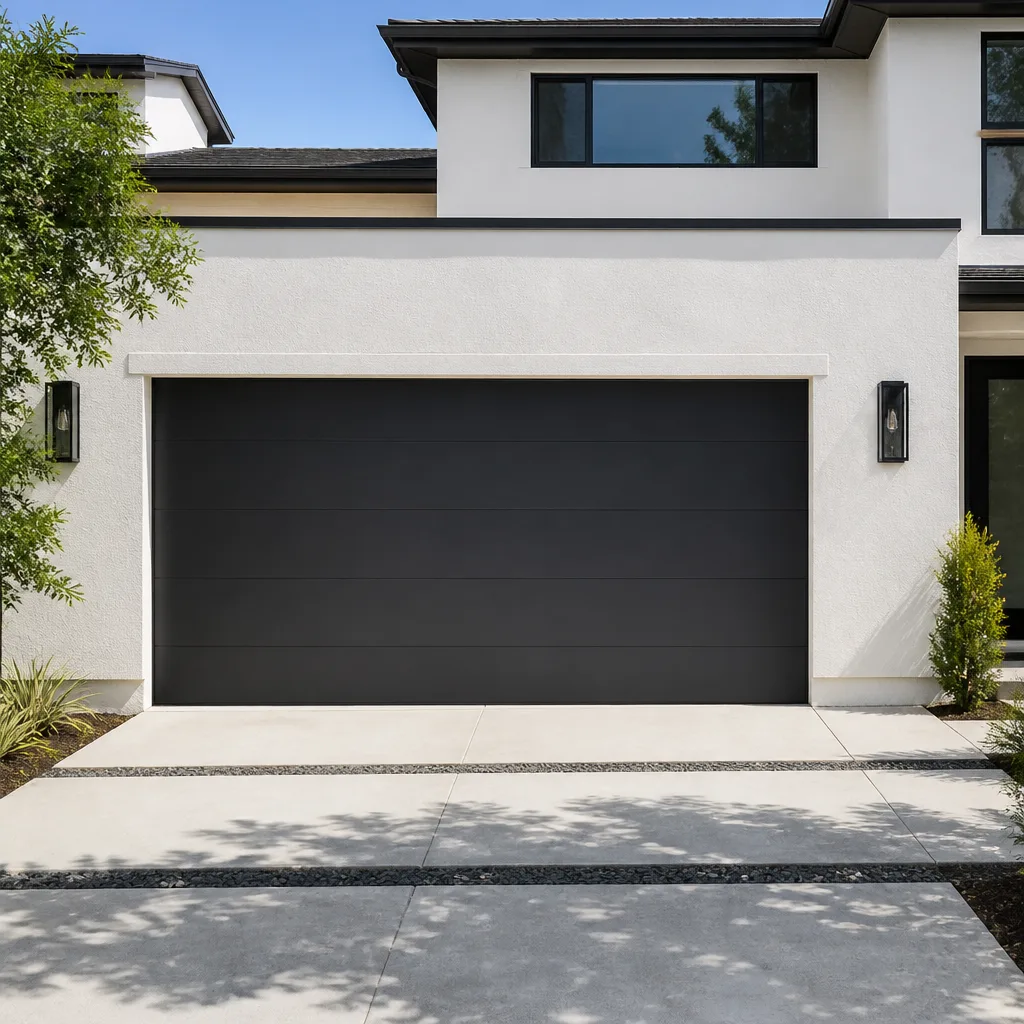 Modern flush
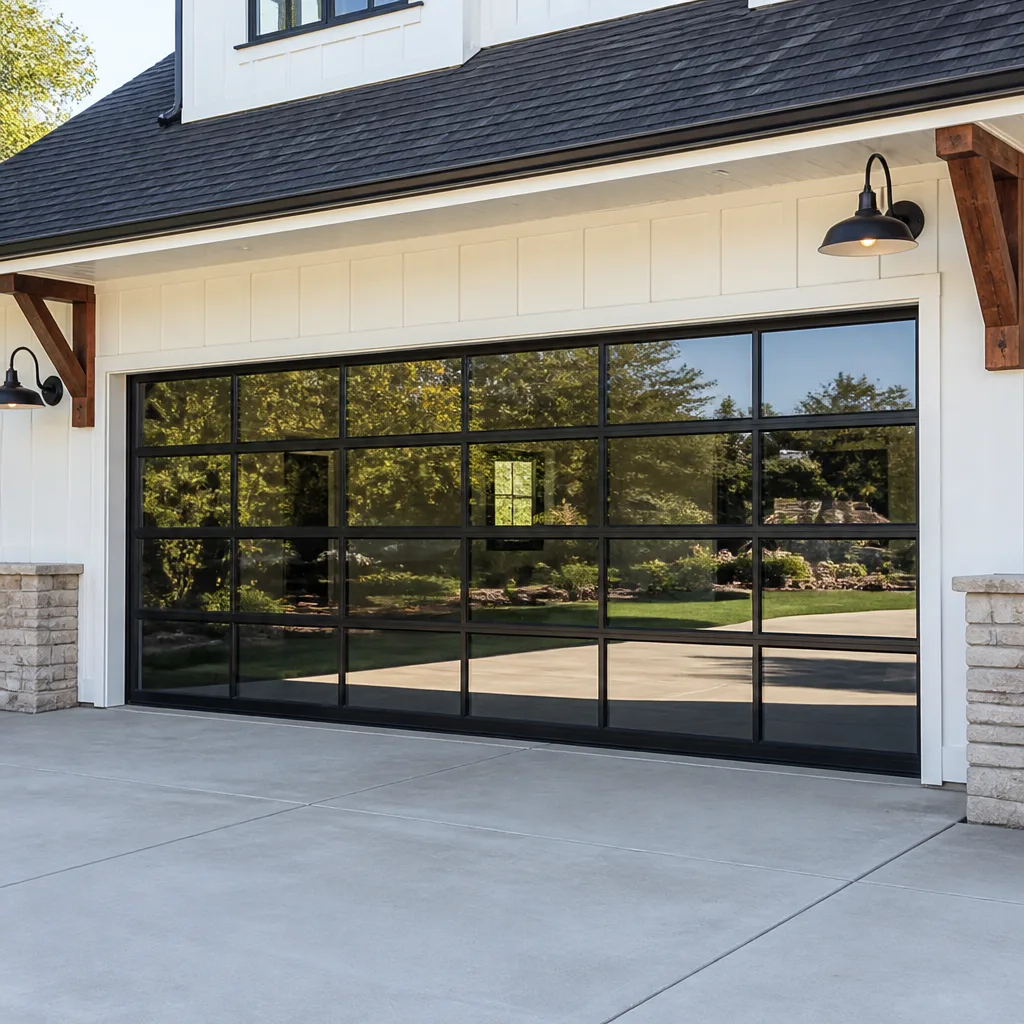 Full-view glass
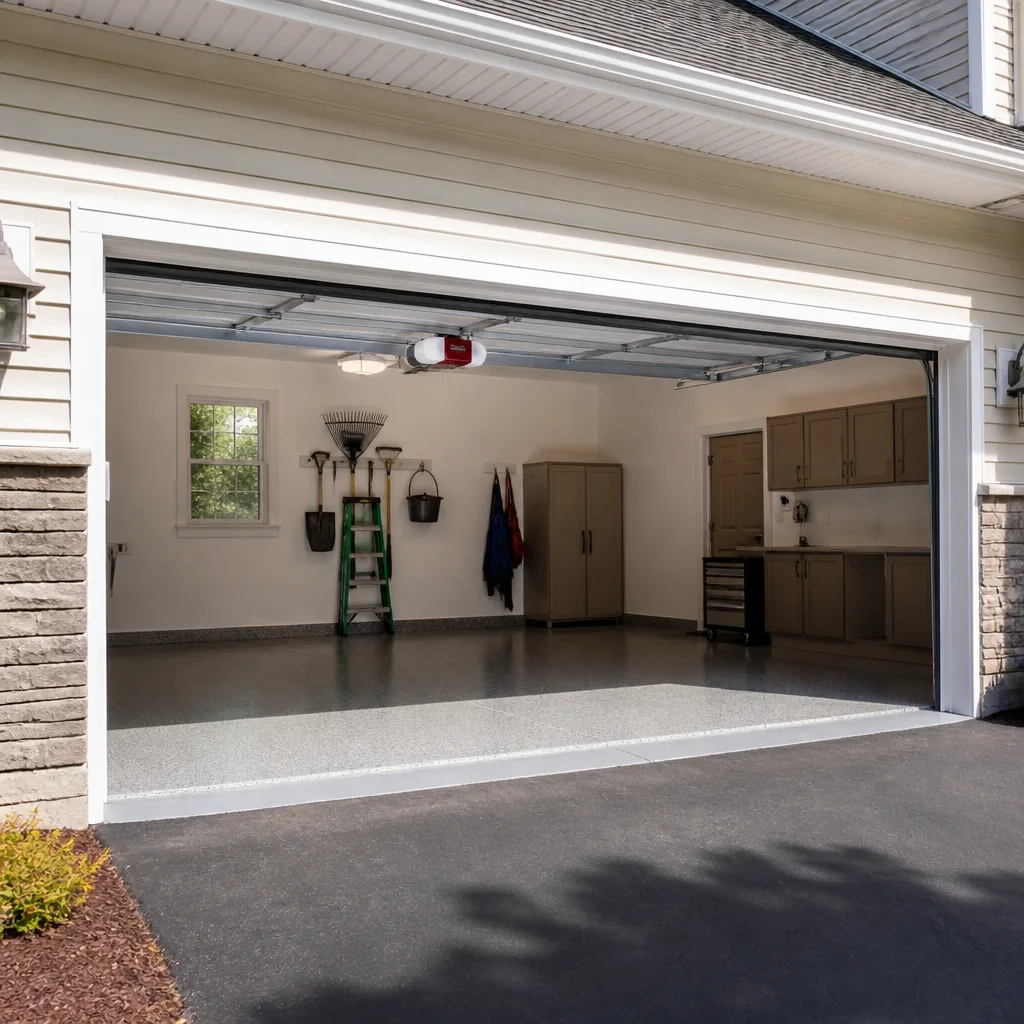 LiftMaster openers
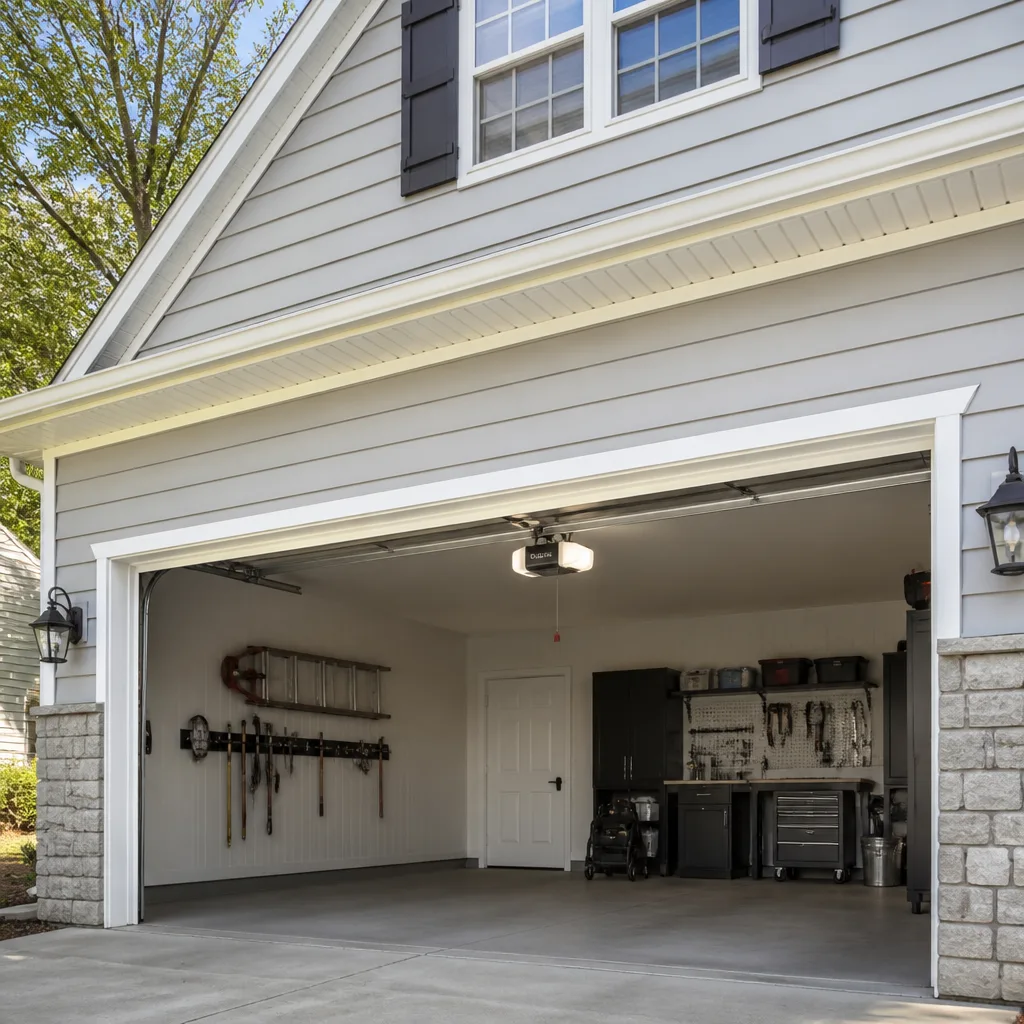 Chamberlain openers
Full 25-point door and opener safety check with every visit - springs, cables, rollers, tracks, and your LiftMaster or Chamberlain opener included
You get a price before we start. It does not change when the pro arrives.
Get your free estimateDIY vs Professional Garage Door: The Norwood Homeowner’s Decision Guide
A torsion spring doesn’t care how many videos you’ve watched. It stores enough energy to hurt you in a fraction of a second, and that’s not because homeowners are careless. It’s because the physics of a spring failure are faster than human reaction time. That single fact should shape every “can I do this myself?” decision you make about your garage door. Some jobs on that door are genuinely weekend-friendly, and plenty of Norwood homeowners handle them without trouble. Others sit on the wrong side of a line drawn by stored tension, and no amount of confidence moves them to the safe side. This guide draws that line task by task, so you know what to touch and what to leave to a technician.
Quick Answer
You can safely handle weatherstripping, lubrication, sensor alignment, remote pairing, and most opener programming yourself. You should not touch torsion springs, extension springs, cables, or any track work on a door that’s under tension. Everything else falls in between, and the deciding question is always whether the part stores energy. If it does, call a technician. If it doesn’t, roll up your sleeves.
Styles & brands we work with
- Raised-panel steel
- Carriage house
- Modern flush
- Full-view glass
- LiftMaster openers
- Chamberlain openers
Table of Contents
- The One Rule That Decides Every DIY Garage Door Job
- The Definitive Yes List: What You Can Safely Do Yourself
- The Definitive No List: What Requires a Technician
- The Real Cost of a DIY Spring Replacement
- Opener Programming, Remote Pairing, and Limit Adjustments You Can Do
- When a Crooked Track Is a Symptom, Not the Problem
- The Massachusetts Liability Question
- What Norwood Homes and Weather Do to Your Door
The One Rule That Decides Every DIY Garage Door Job
The garage door is a balancing act. Springs pull one way, gravity pulls the other, and the whole system is tuned so a hundred-plus pounds of door moves with a few pounds of effort. That tuning is the thing that makes a garage door safe and the thing that makes it dangerous. Any component holding that stored force is in a different category from weatherstripping and hinges.
Think of it as two zones. The “cold” zone is everything that doesn’t fight gravity: seals, hinges, rollers, sensors, opener settings, the door’s cosmetic surfaces. The “hot” zone is everything holding tension: torsion springs on the header, extension springs above the tracks, cables, and the brackets those cables run through. The hot zone is where a mistake doesn’t just cost money. It can cost a finger or worse.
We’ve seen this split play out in Norwood homes of every age. A homeowner who’s fine replacing a bottom seal calls us because a spring snapped, and the difference between those two jobs isn’t skill. It’s physics. Our technicians have up to 15 years of experience, and the first thing any of them will tell you is that spring work looks easy in a video and isn’t. The tools alone (winding bars, a proper size gauge, a spring clamp) cost more than a single spring replacement in most cases, and that’s before you factor in the risk.
The good news is that the safe zone is bigger than most people think. Sensors, remotes, opener limits, lubrication, weatherstripping, and even panel replacement on a door that’s down and untensioned are all reasonable DIY work. The line isn’t drawn by your confidence level. It’s drawn by what the part is holding.
The Definitive Yes List: What You Can Safely Do Yourself
These are the jobs we’d take on ourselves, and the ones we’re happy to walk a Norwood homeowner through over the phone if they’d rather try it first. None of them involve a component under significant tension, and all of them are reversible.
- Weatherstripping and bottom seals. A worn bottom seal lets in cold, water, and pests. It pulls out of its channel and presses back in with no tools beyond a screwdriver, and a whole door’s worth costs less than a technician visit.
- Lubrication. A garage door has rollers, hinges, and pivot points that want a garage-door-specific lubricant, not WD-40. Rollers and hinges take a light coat; the spring coil itself can take a spray of garage-door lubricant, but don’t try to adjust it while you’re there.
- Sensor alignment. If the door reverses before it closes, the safety sensors mounted at the base of each track are almost always the reason. Wipe the lenses, check that each one’s LED light is on, and nudge them until they’re aimed at each other.
- Remote pairing and keypad programming. Covered in detail below. This is the most common call we get that ends with the homeowner finishing the job in five minutes.
- Opening force and travel-limit adjustment. Covered below too. It’s a turn of a screw on the opener head, and it’s the fix for a door that doesn’t quite close or opens too far.
- Cleaning and lubricating tracks. A rag, a vacuum, and a small brush. Don’t bend the track to “help” the rollers; just clear the debris.
- Cosmetic panel replacement on a door that’s fully down. If the door is closed and the springs are untensioned, swapping a dented panel is reasonable. If the door won’t come down, stop and call.
The pattern here is that the safe list is all about maintenance and settings. Regular maintenance genuinely extends the life of a door, and garage door repair calls often start with something preventable. If you’re unsure whether a job is on this list or the next one, that’s the moment to call and ask. Our phone line is open for exactly that reason.
The Definitive No List: What Requires a Technician
These jobs involve stored energy under hundreds of pounds of tension, and we mean that literally. A torsion spring on a standard residential door holds enough force to throw a person across a garage, and it can do it with no warning. The tools required to release that force safely (the right winding bars, the right size springs, a proper clamp) are specialist equipment. So is the knowledge of how many turns a given spring needs.
- Torsion spring replacement or adjustment. The spring on the header above the door. Adjusting tension means winding or unwinding a spring that’s holding the door’s full weight. Don’t attempt it.
- Extension spring replacement. The springs above the horizontal tracks on older or lighter doors. They snap and fly, which is why the safer versions have containment cables. Replacement still needs a technician.
- Cable replacement. Cables run from the bottom corners up to the springs and carry the whole door’s load. A slack or frayed cable is a warning sign, not a repair project.
- Track realignment on an under-tension door. A track that’s bent under a loaded door can release the rollers and drop the door. This needs the tension released first.
- Spring, cable, or bracket inspection after a loud noise. If you heard a bang from the garage and the door won’t lift, the spring has broken. Leave the door down and call.
- Opener motor or gear replacement. Interior opener work is less dangerous than spring work, but diagnosing a dead opener usually means chasing a board, a capacitor, or a stripped gear. That’s a repair, not a DIY adjustment.
- New door installation. New doors are measured, ordered, and fitted with new springs to match the door’s weight. Get a free measure and a written price.
We’re trained on the eight most widely owned door and opener brands (LiftMaster, Chamberlain, Genie, Clopay, Amarr, Wayne Dalton, Craftsman, and Raynor), which means a homeowner rarely hears “we don’t service that.” If you’re in the no-list zone, that’s the call to make. Garage door spring repair is the single most common reason people reach out, and it’s the one we’d most want them not to try at home.
The Real Cost of a DIY Spring Replacement
The math on a DIY spring looks simple until you add up the tools and the risk of a wrong size. A single spring is a shopping-cart purchase. The winding bars, the size gauge, and the spring clamp are not, and a spring of the wrong size or wire gauge will either fail early or overload your opener. If you get it wrong, you’ve spent the tool money plus the spring money plus, eventually, a technician visit to do it right.
Then there’s the callback problem. A spring installed with the wrong number of turns or the wrong size leaves the door unbalanced. The door may close, but the opener is now doing work the spring should do, and that shortens the opener’s life. A few months later you’re paying for a service call that traces back to the original DIY job. We’ve seen this sequence more than once in Norwood, and the fix is always more involved than doing it once, correctly.
For context on what a technician charges for spring work, a typical single-spring replacement in the Norwood area runs in the low hundreds of dollars, and a matched pair is usually about twice that because pairs get replaced together. Those are estimates only, and the written quote you get before any work starts is the number that counts. Compare that to the cost of winding bars, a gauge, and a spring, plus the chance of a second repair, and the DIY route usually comes out behind on a part that holds the whole door up. The same logic applies to garage door opener repair: diagnosing is cheap, guessing is not.
Opener Programming, Remote Pairing, and Limit Adjustments You Can Do
Opener settings are the most DIY-friendly part of the whole system. They’re low-voltage, they don’t hold tension, and every major brand makes them accessible. Here’s how the three most common brands in Norwood garages handle it.
LiftMaster and Chamberlain remotes
Both use the same “learn” button on the opener head, usually behind the light lens or on the back panel. Press and release it, then press and hold the remote button within about 30 seconds. The opener’s light flashes to confirm. If the remote still won’t pair, replace the battery first, then check that the remote matches the opener’s frequency band. Newer units use Security+ 2.0, and an older remote won’t talk to them.
Genie remotes
Genie openers use a learn button too, but the pairing sequence depends on the model. On Intellicode units, press the learn button until the LED lights, then press the remote button twice. On older Genie units without Intellicode, you’ll need the DIP switches inside the remote to match the switches on the opener. If your remote has a row of tiny switches and your opener has the same row, that’s the older system.
Setting travel limits and force
If the door stops short of the floor or won’t quite close, the fix is usually the limit screw on the opener head. Turn it a quarter turn at a time toward the direction printed on the label, test the door, and repeat. The force setting is the second screw, and it should be set just high enough to move the door smoothly. If you find yourself turning the force up repeatedly to get the door to close, stop. That’s usually the opener compensating for a failing spring, and a spring, not a force setting, is the real repair.
When a “programming issue” turns out to be a mechanical one, that’s what we’re here for. Our garage door opener repair work covers both sides of the system, so you’re not coordinating a door tech and an opener tech for one problem.
When a Crooked Track Is a Symptom, Not the Problem
A track that’s out of line at the bottom of the door looks like a simple alignment job. Often it’s the visible end of something else. The door’s weight is carried by the springs and cables, and the tracks only guide the door. If a track is bent or leaning, the door may have been riding against it for a while, which can mean a roller is seized, a cable has stretched, or the springs are out of balance on one side.
Straightening a track by hand with the door under tension is risky, and it’s the wrong fix even when it works. The track will bend again, and the real cause, whatever’s loading the track, will keep damaging the door. What we look for is the pattern: is the bend on one side only? Is the gap at the bottom even? Does the door sit crooked on the floor when closed? Those answers point to the actual repair.
Track realignment done properly starts with releasing the door’s tension and checking the spring balance, the cables, and the rollers. It’s a repair that belongs on the technician list because of that first step. A Norwood homeowner can do plenty of things themselves, but a track that’s fighting a loaded door is not one of them. If the door is already down and untensioned, the risk drops, but on any door that opens and closes, leave it to a technician.
The Massachusetts Liability Question
Here’s the part most guides skip. If a self-repaired spring fails and damages your car, your door, or your garage, what does your homeowner’s insurance say? The honest answer is that it depends on the policy, and no one should promise you an outcome without reading the actual paperwork. What we can tell you is the pattern that matters: insurers look at who did the work and whether it was done to a professional standard.
Work performed by a licensed professional is easier to support in a claim. Work done by the homeowner is a gray area, and if the adjuster determines the loss came from improperly installed or improperly tensioned parts, coverage can be reduced or denied. On a car parked in the garage, that’s an expensive gray area. The other piece is that homeowners can carry liability for injuries to someone else on the property from a door they repaired themselves. That exposure runs higher than most people realize.
We can’t tell you what your policy covers. We can tell you that a written quote, an invoice showing a licensed professional did the work, and a warranty on the parts and labor are what you’d want in hand if you ever had to make a claim. That’s one more reason the hot-zone work belongs on the technician list. If you’re weighing the decision, a call to (866) 783-4096 gets you a free estimate and a written price before anything starts.
What Norwood Homes and Weather Do to Your Door
Norwood’s climate is a hard one on garage doors. Cold winters, then a spring thaw, then humid summers. Every one of those swings works the springs and the seals. The freeze-thaw cycle is the big one: water gets into the bottom seal and track area, freezes, and expands, and over a few winters that’s enough to crack a seal, lift a track, or work a hinge loose. A lot of the “minor” problems we see in Norwood trace back to the thaw, not to a part that failed on its own.
The neighborhood matters too. Older homes with detached garages often have doors that were fitted decades ago and retrofitted with a newer opener at some point, which is where mismatched springs and overworked openers come from. Newer construction tends to have tighter doors, but weatherstripping in those homes still takes a beating from the temperature swings. Whether you’re near Norwood Center, the Neponset Street corridor, or out toward the Islington side, the maintenance calendar looks similar: check the seals and hinges in the fall before the cold sets in, and check them again in the spring after the thaw.
That fall and spring routine is the best DIY investment you can make. Lubricate the moving parts, clear the tracks, replace a worn bottom seal, and test the sensors. You’ll spend less than an hour and you’ll catch the small stuff before it turns into a spring job. The parts that need a technician, springs and cables, get left alone. If something in that fall check doesn’t look right, call us and we’ll tell you whether it’s a real repair or a maintenance item. A lot of our Norwood Garage Door Repair work starts with exactly that kind of call.
Common Mistakes to Avoid
- Using WD-40 on the tracks. It’s a solvent, not a lubricant, and it attracts grit. Use a garage-door-specific lubricant on the rollers and hinges. The tracks themselves should be clean and dry, not greasy.
- Trying to “help” a stuck door by forcing it. If the door won’t move, forcing it bends the tracks and loads the opener. A stuck door is a symptom. Find out what’s stuck before you push.
- Adjusting the force setting to compensate for a failing spring. Turning up the opener’s force to move a heavier door masks the problem and shortens the opener’s life. If the door feels heavy, the spring is the repair.
- Straightening a track on a loaded door. It bends again, and the real cause keeps damaging the door. Track issues on a door that opens are technician work.
- Ordering a spring online without the right size. Wire diameter, inside diameter, and length all matter. A mismatched spring either fails early or overloads the opener. This is the mistake we see most often after a DIY attempt in Norwood.
- Leaving a broken spring door closed but “usable.” A door with one broken spring on a two-spring system runs on half the tension and overloads the other spring and the opener. Don’t keep using it.
- Assuming the opener is broken when the sensors are the problem. Check the two little lights at the base of the tracks before you buy a new opener. It’s the cheapest diagnostic in the whole garage.
See the difference
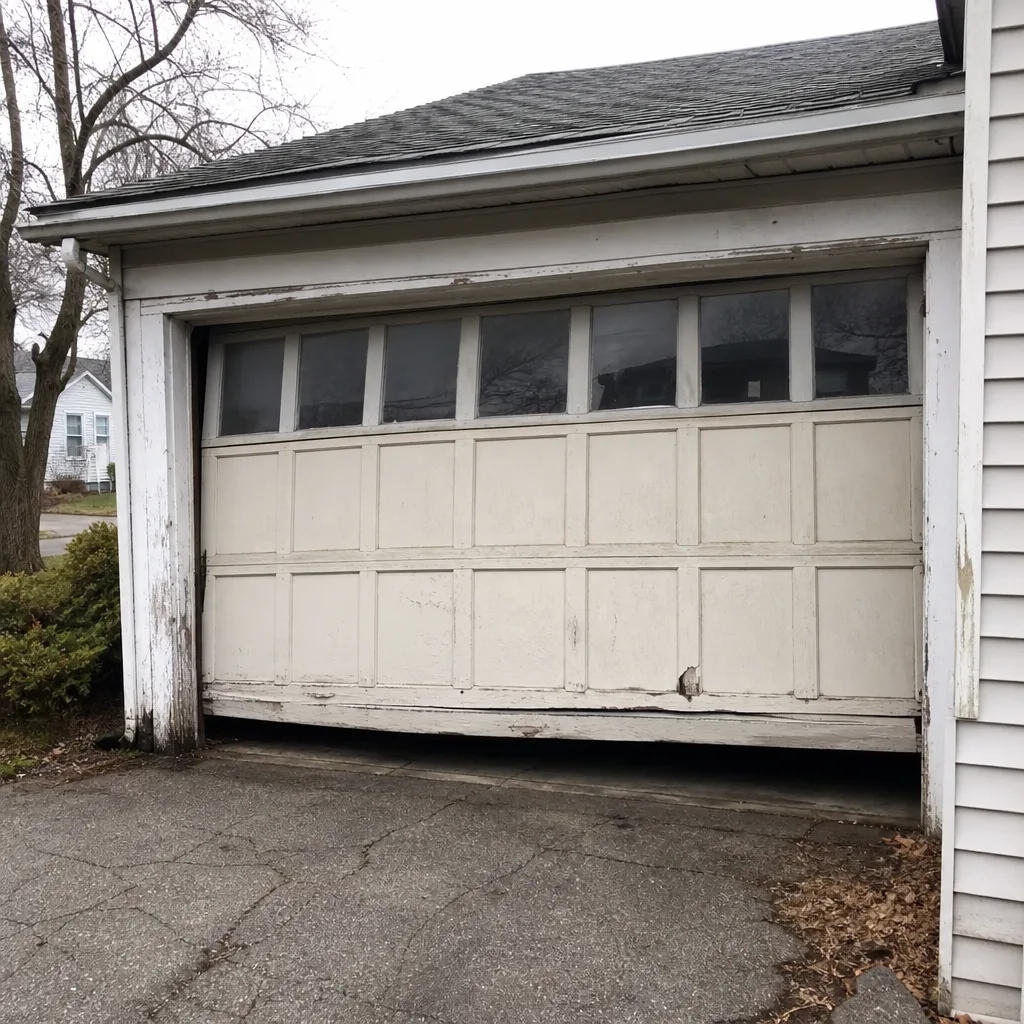 Before
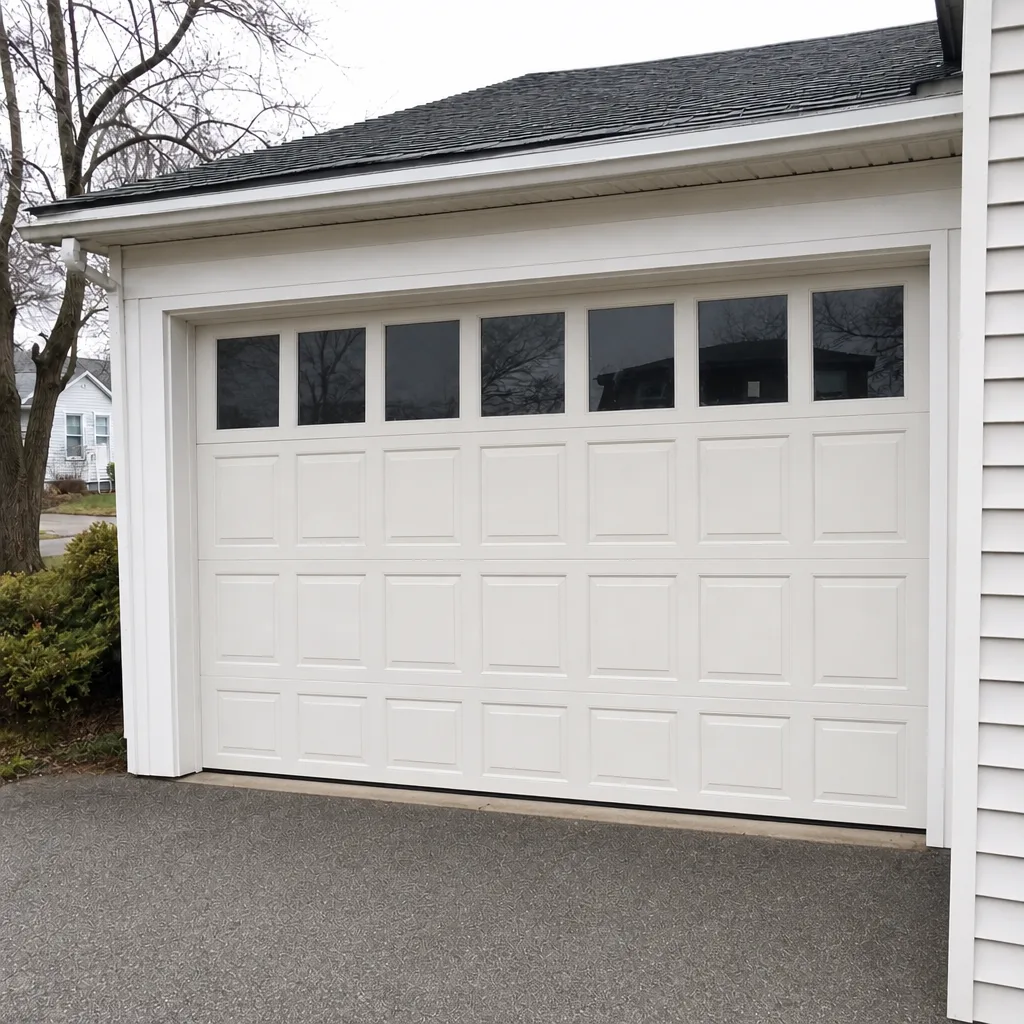 After
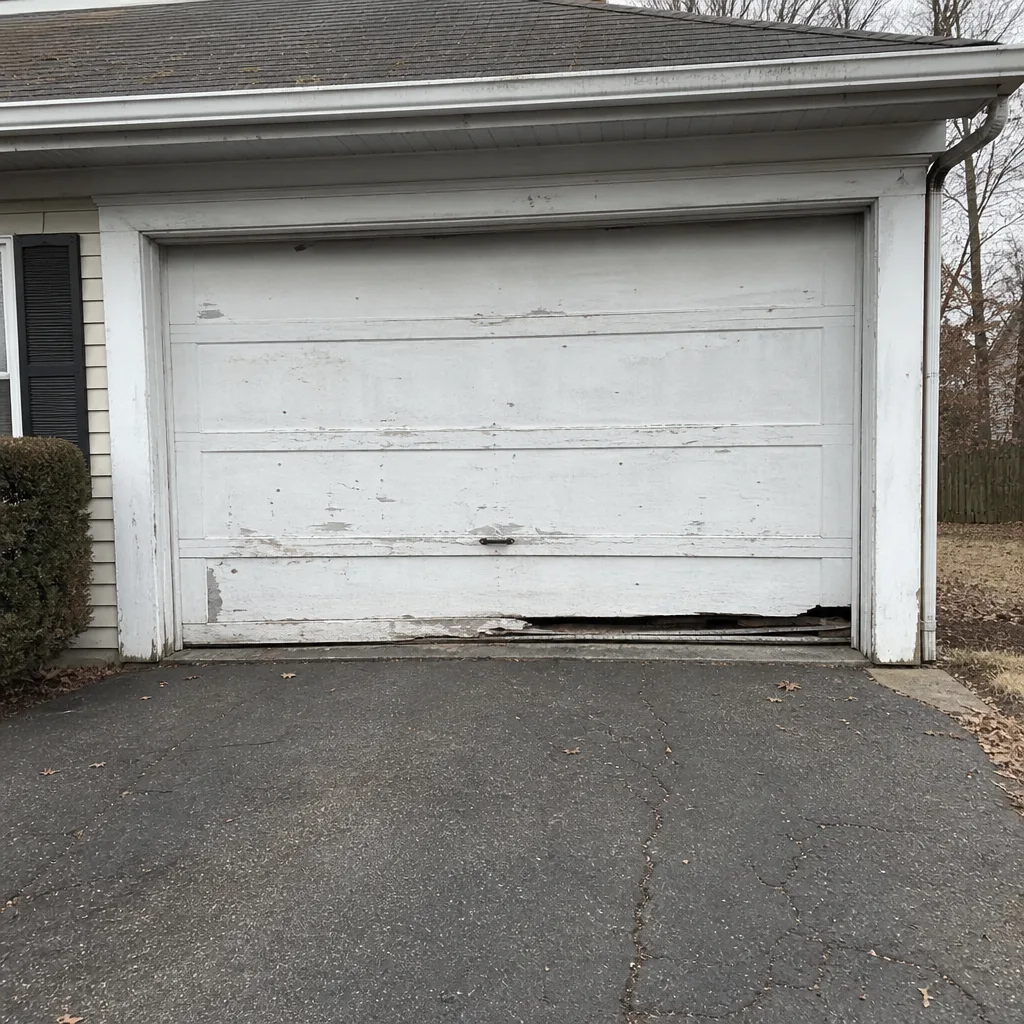 Before
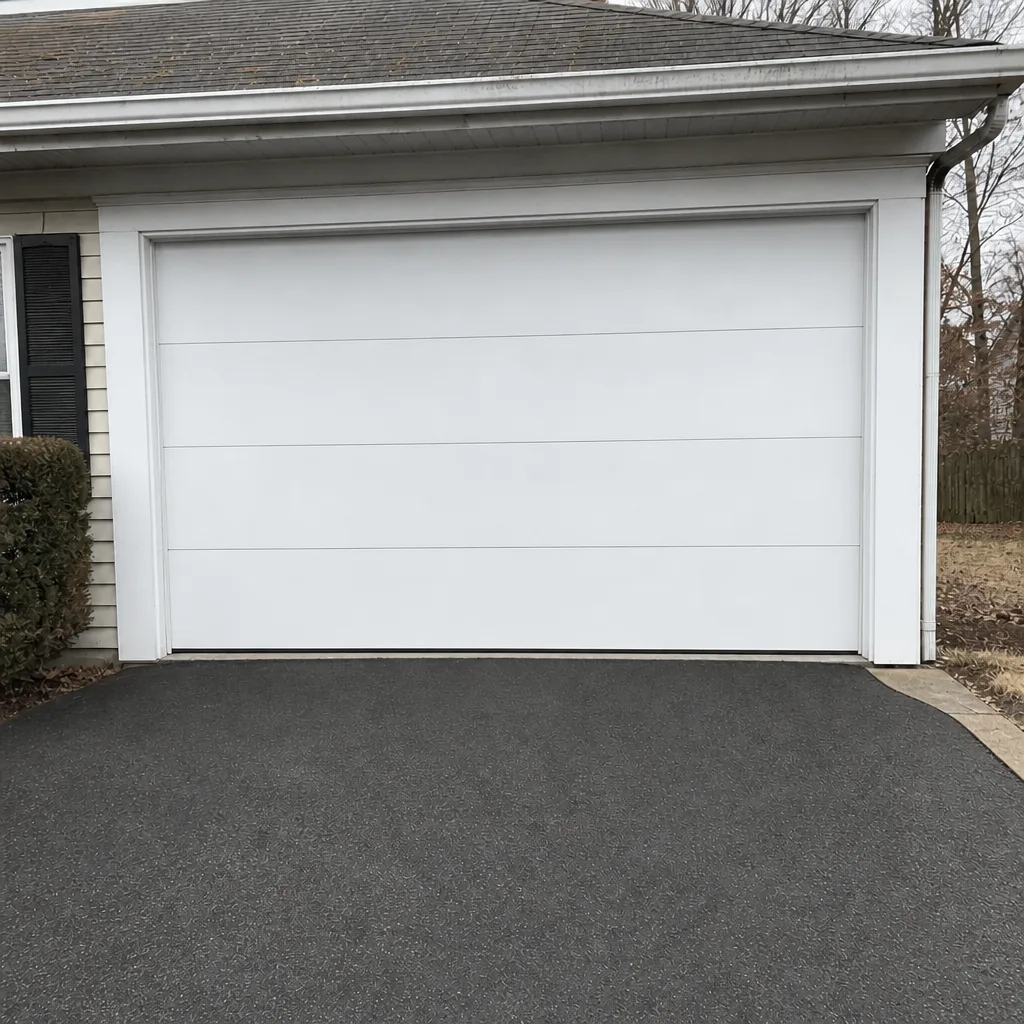 After
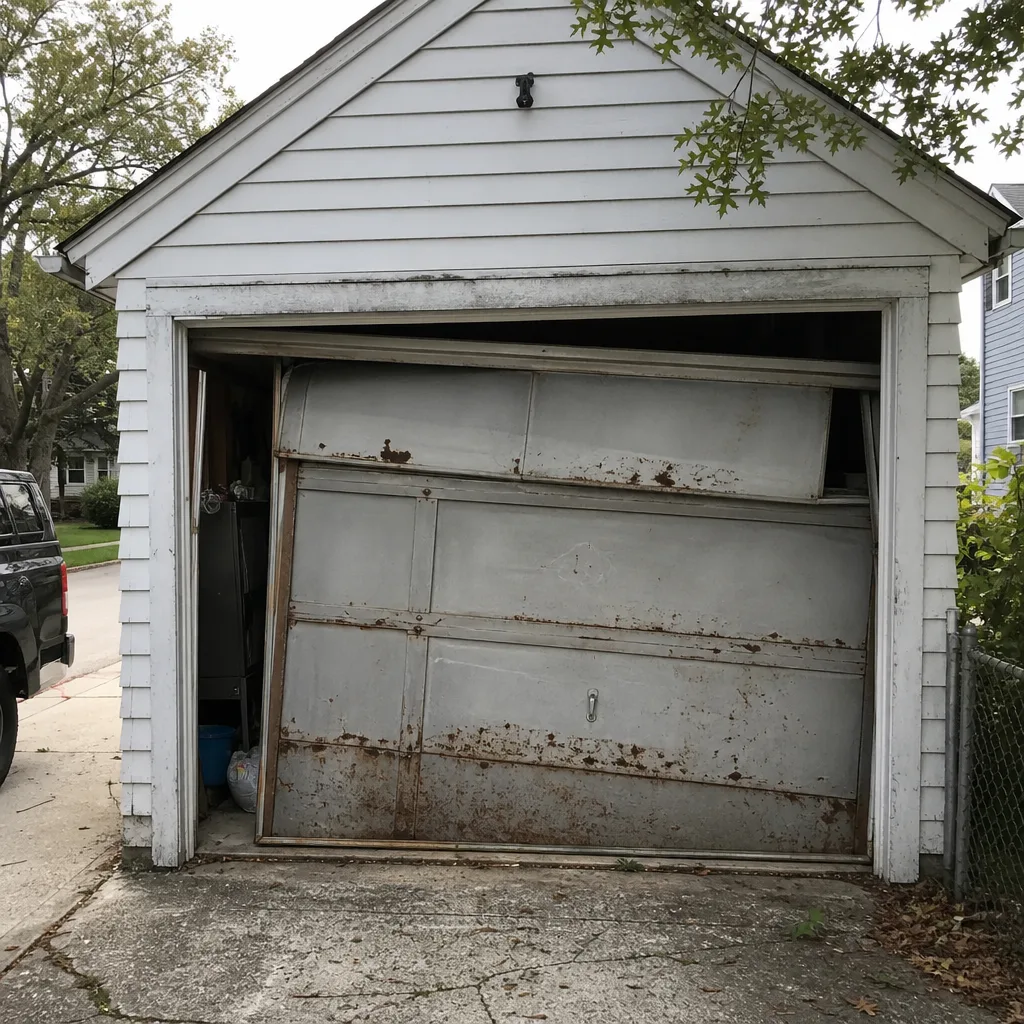 Before
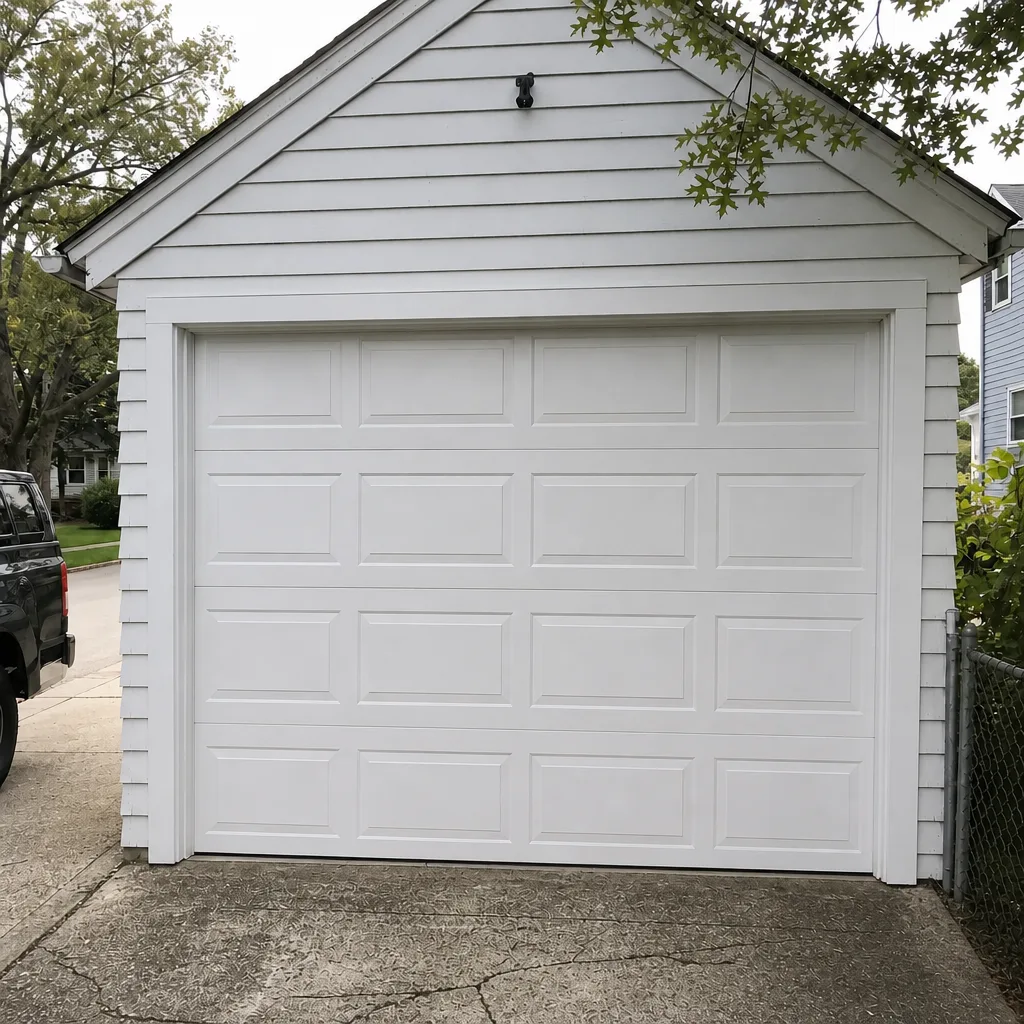 After
When to Call a Professional
Call when the failure is in the tension zone, and call when you’re not sure it isn’t. That means a snapped or stretched spring, a frayed cable, a door that feels heavy to lift by hand, a track that’s bent or leaning on a door that opens, or any loud bang from the garage followed by a door that won’t lift. Call if the door is crooked on the floor or if one side lags the other. Call if you’ve tried a remote re-pair and a limit adjustment and the opener still won’t hold. And call if the door won’t close, because a door that won’t close is a security problem, not just a convenience one.
Norwood Garage Door Repair offers free estimates in Norwood, and the price is quoted and agreed before any work starts. Call (866) 783-4096. We answer 24/7. Fast dispatch from 7am to 7pm, Sunday through Friday. If you call outside dispatch hours, we book you into the next opening. Same-day service is available for repairs, and for a new door we’ll do a free measure and a written price instead, since that work is measured and scheduled.
Frequently Asked Questions
No, and this is the one job on the whole door we’d ask you not to attempt. A torsion spring holds enough stored energy to injure you in less than a second, and the winding tools and correct spring size matter more than the YouTube tutorials suggest. Call (866) 783-4096 for a free estimate instead. Estimates are free.
Replacing a single spring in the Norwood area typically runs in the low hundreds of dollars, and a matched pair usually costs about twice that because pairs get replaced together. Those are estimates, and the written quote you get before any work starts is the price. Call for an exact quote. Estimates are free.
Yes, same-day service is available for garage door repairs in Norwood. We answer 24/7, with fast dispatch from 7am to 7pm, Sunday through Friday. A call outside dispatch hours goes into the next opening. Call (866) 783-4096.
No. The price is quoted and agreed before any work starts, so the written estimate you sign is what you pay. If we find something extra while we’re in there, we’ll tell you what it is and what it costs before touching it. Call for a free estimate.
Yes, the local professional who comes to your home is licensed and insured as Massachusetts requires. Our technicians have up to 15 years of experience and are trained on LiftMaster, Chamberlain, Genie, Clopay, Amarr, Wayne Dalton, Craftsman, and Raynor equipment. Call to book a free estimate.
Yes, for maintenance work. Weatherstripping, lubrication, sensor alignment, remote pairing, and limit adjustments are all reasonable DIY jobs and they genuinely extend the life of the door. Anything holding tension, meaning springs, cables, and loaded tracks, is not. If you’re unsure which list a job belongs to, call and ask.
The Bottom Line
The DIY question isn’t about how handy you are. It’s about stored energy. Seals, sensors, lubricant, remotes, and opener settings are fair game, and handling them yourself keeps the door healthy between service visits. Springs, cables, and any track work on a loaded door sit behind that line, and no video changes the math. If you take one thing from this guide, make it that. Everything else is a judgment call we’re happy to help you make. When a job is on the technician side, or you’d rather not find out the hard way, call (866) 783-4096 for a free estimate. The price is agreed before any work starts, and your garage door either works or we’re not done.
Written by the team at Norwood Garage Door Repair.